Security configuration management turns an approved system configuration into a state you can enforce and verify. Before automating a correction, establish which baseline applies to the asset's role. Then let policy govern routine remediation, with people handling uncertain scope and permitted exceptions.
A setting can be wrong on an employee laptop and necessary on a dedicated service host. Applying the same correction to both may produce a clean assessment result while interrupting the service. The practical starting point is therefore a defined relationship between the asset, its approved role, and the intended configuration.
That relationship makes automation useful. A team should not have to reconsider the same approved correction for every qualifying endpoint. It should make the applicability decision once, test the fix for that population, and automate repeatable execution within that boundary.
What does security configuration management cover?
The National Institute of Standards and Technology (NIST) treats security-focused configuration management as a way to manage system configurations while supporting necessary business functionality. Its SP 800-128 guidance connects configuration control with security and organizational risk.
For a remediation team, the baseline is the approved target against which a setting is evaluated. A baseline needs a version and an applicability rule. “Servers should be hardened” does not identify either one. “This approved profile applies to this supported operating-system release and service role” gives the team something it can test.
Keep three questions separate: which baseline applies, whether the asset meets it, and whether an approved action brought it back into compliance. This article addresses the first question and its consequences for automated fixes. The related CIS compliance and remediation evidence guide covers the evidence needed after a failed check is corrected.
Define the population before defining the correction
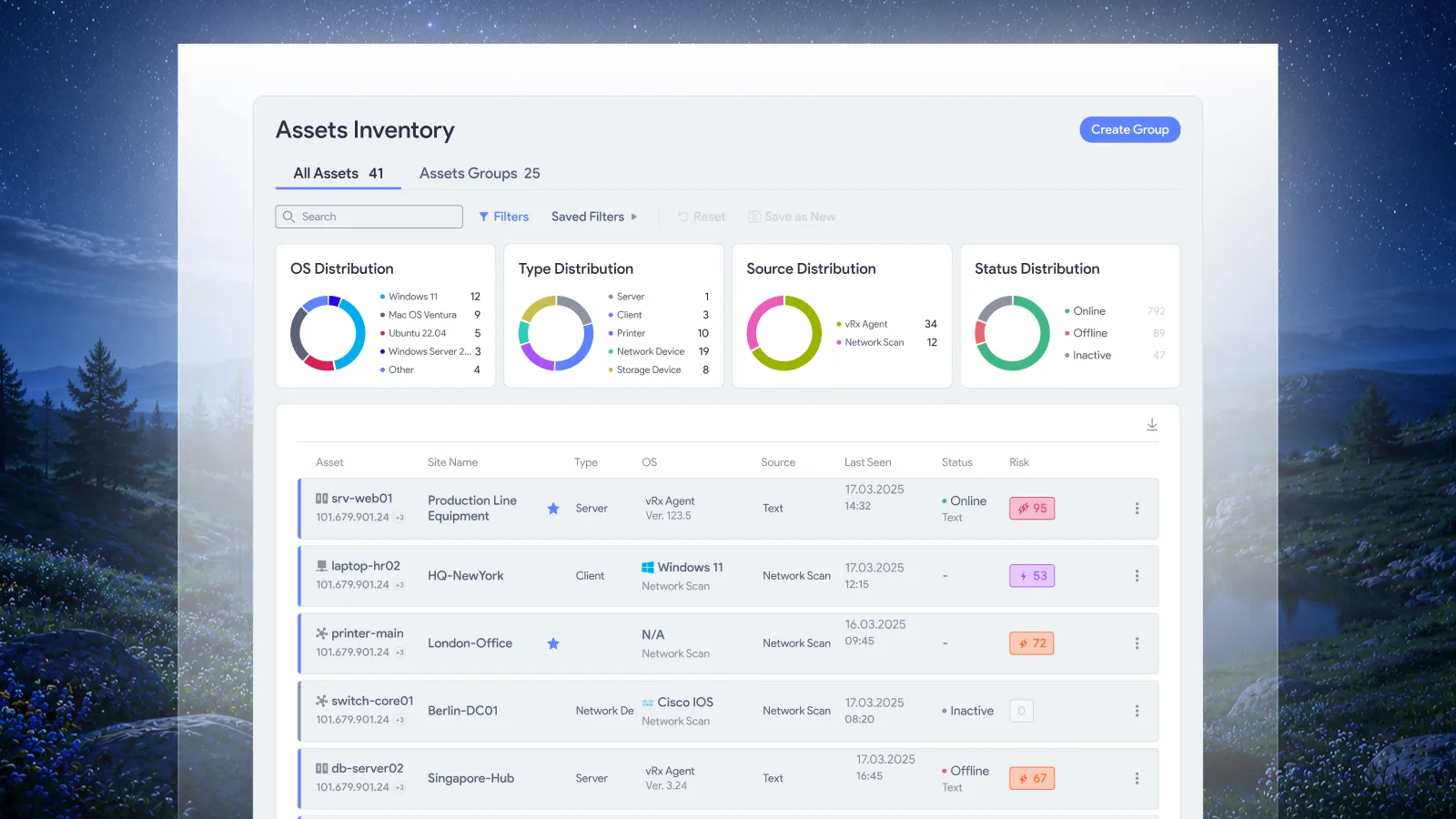
Use asset attributes that explain why the setting should have a particular value. Operating-system family alone may be too broad. A workstation, an application server and a shared administration host can have different dependencies even when they run the same release.
A useful applicability record includes the service role, supported platform version, baseline version, intended value, and exclusion criteria. Name the person or team responsible for resolving ambiguous membership. This is design work for the remediation policy, rather than another approval step for each routine execution.
The following illustrative matrix shows how to express those decisions. It is a planning example, not a prescribed configuration standard. The actual setting values must come from your approved baseline and application requirements.
A narrow exception matters here. Excluding an entire host from every configuration correction because one setting has a dependency leaves unrelated problems untouched. Prefer a record that identifies the particular setting and the circumstances under which its alternate value is permitted.
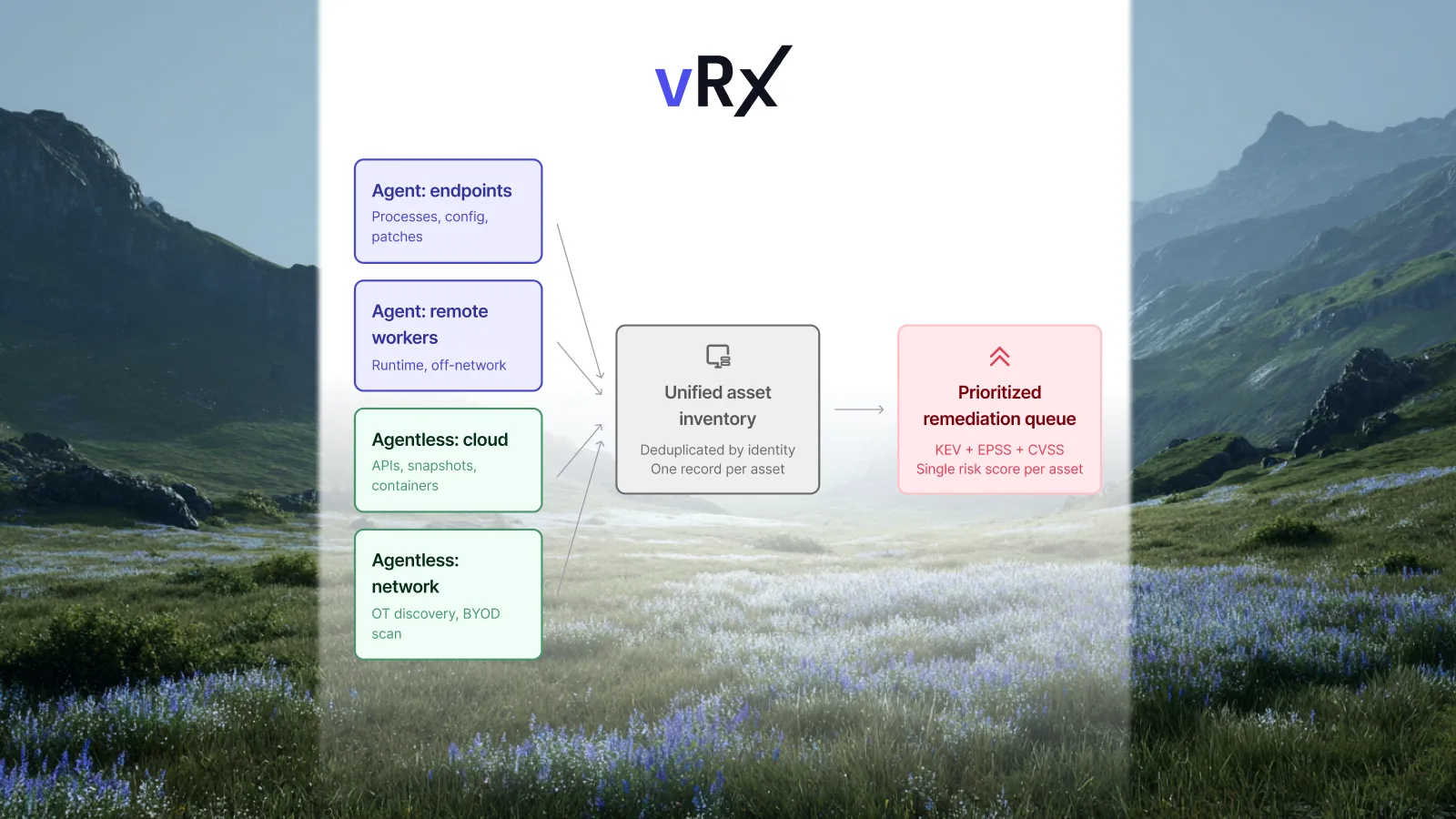
Use vRx to execute the approved remediation
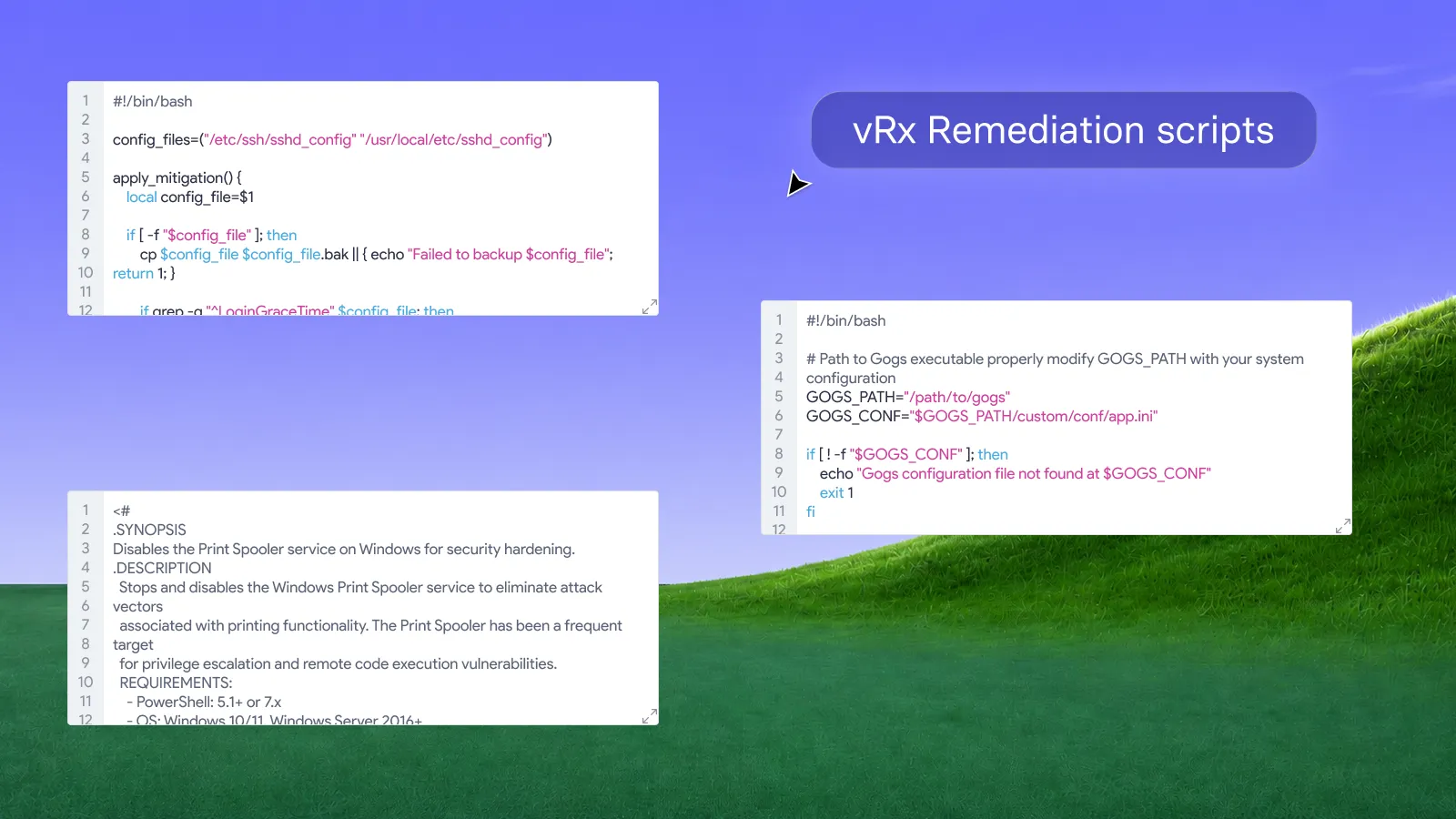
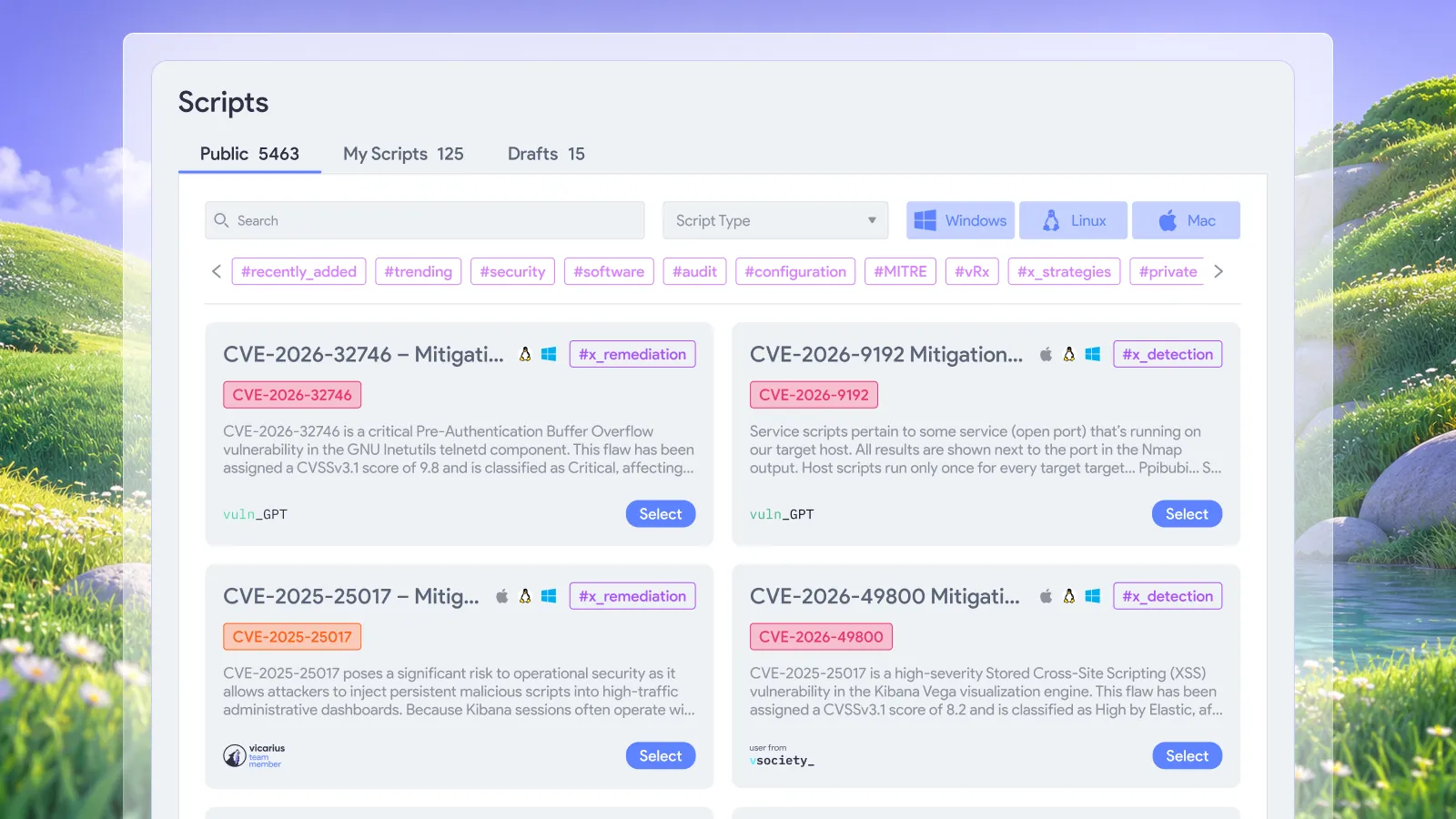
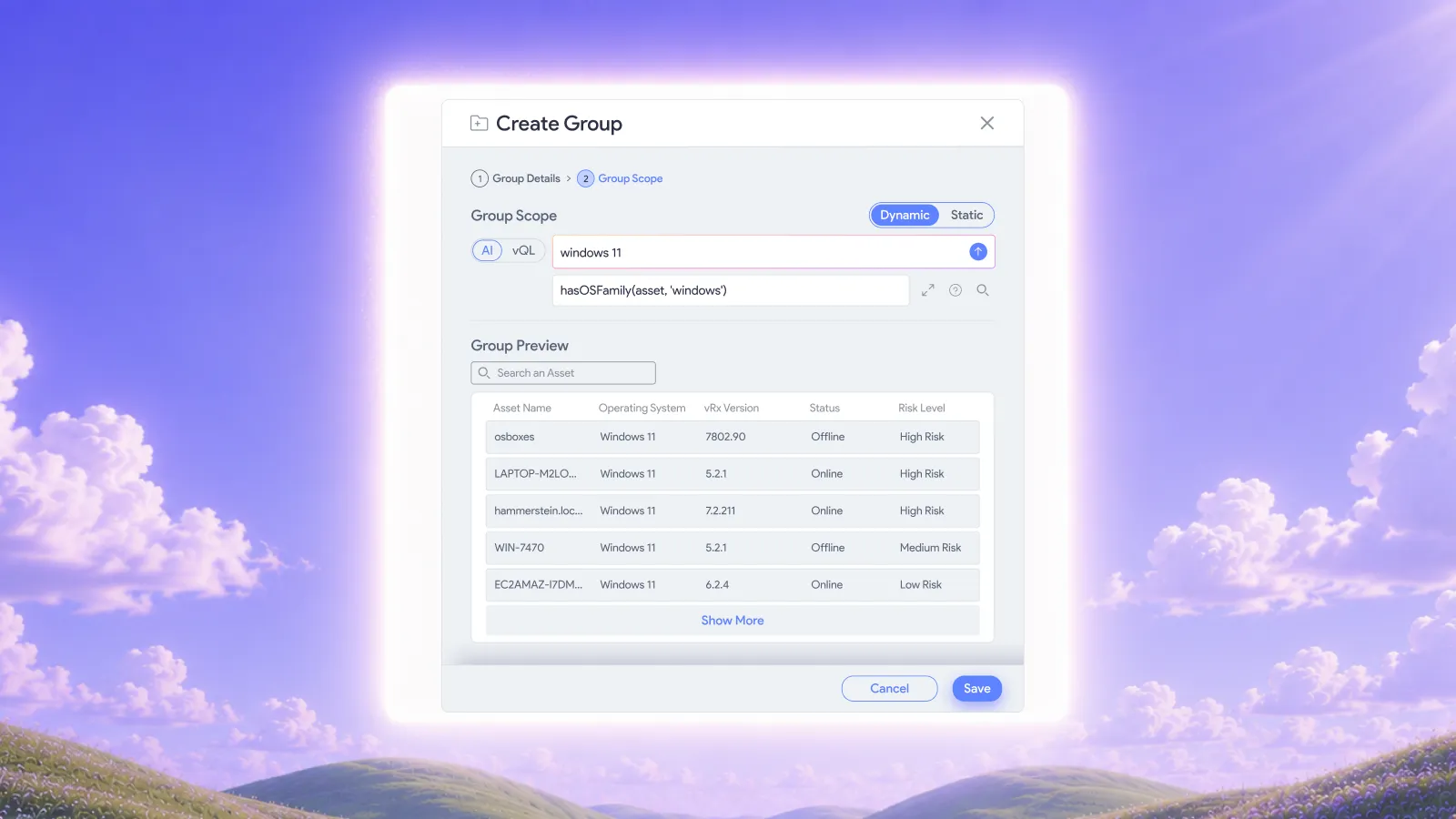
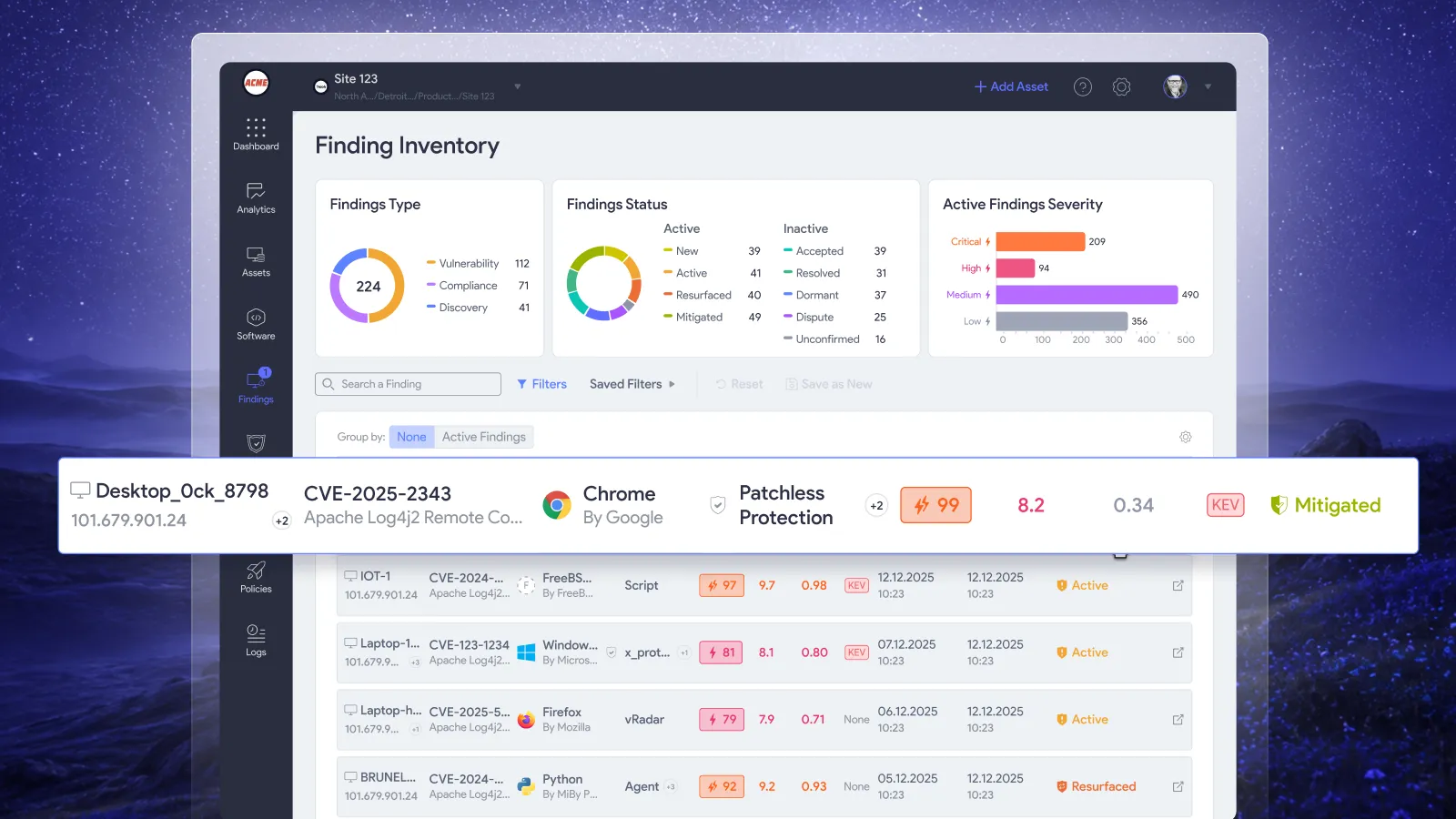
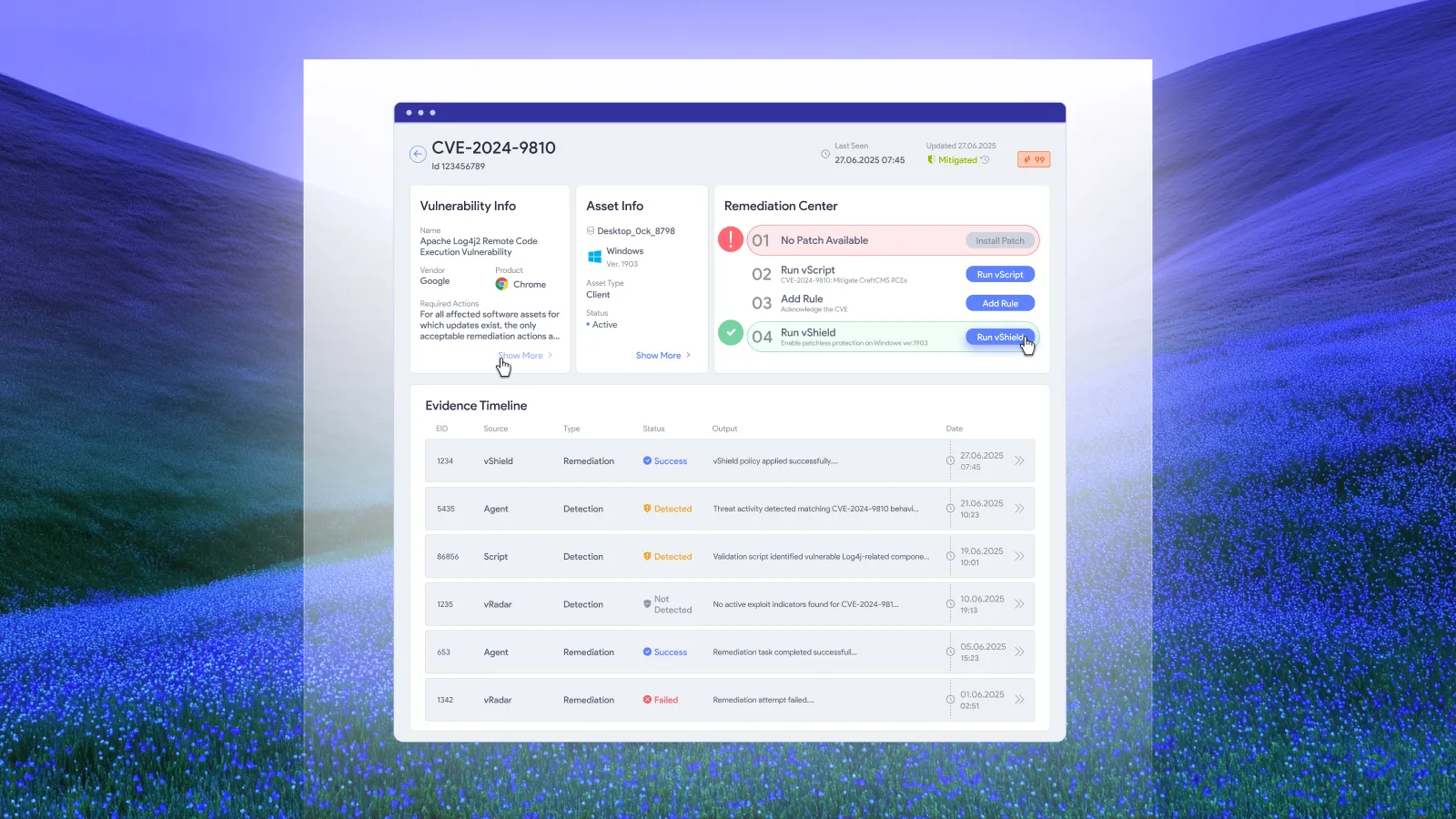
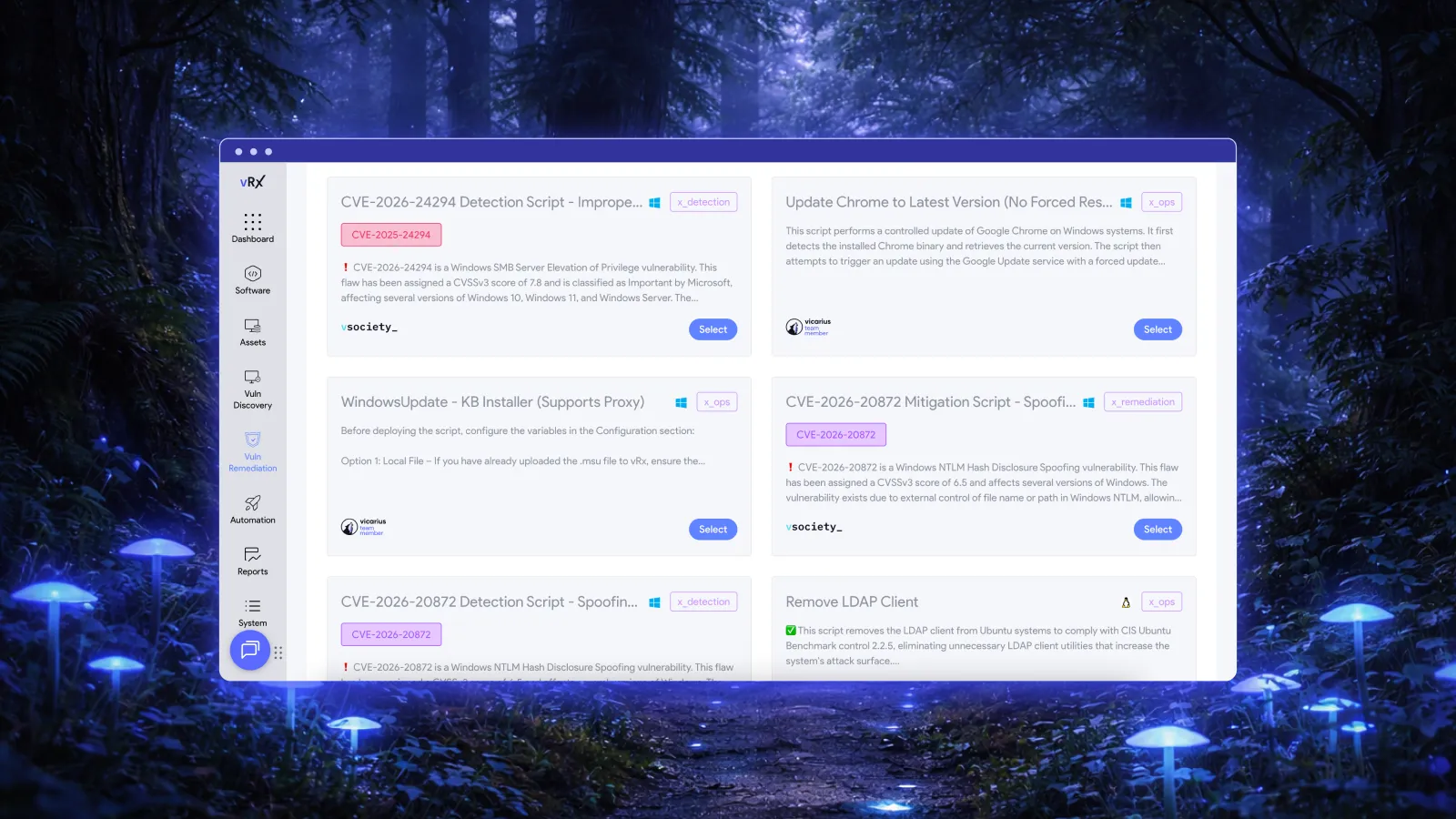
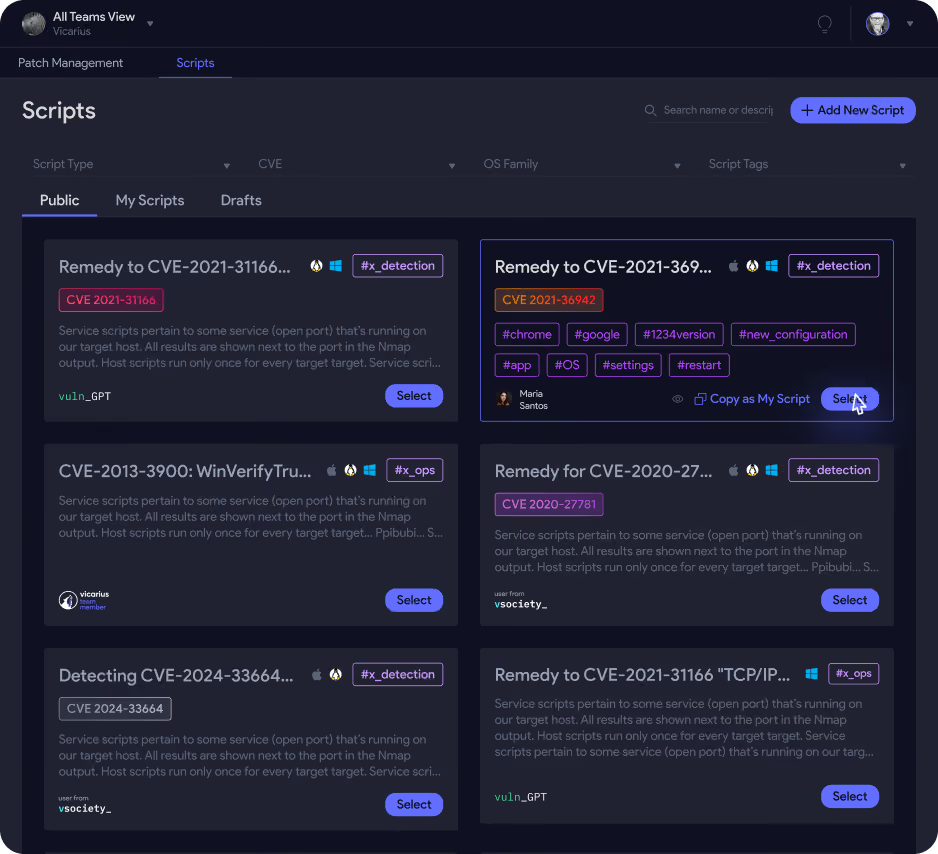
vScript runs custom, community and AI-generated scripts for detection, remediation and hardening. It supports execution against individual assets or groups and records the script, target assets and outcome. Configuration weaknesses and registry misconfigurations are documented use cases.
ScriptAI can generate scripts from a plain-language description of a security or operational need. Give that request a precise intended state and platform context. Treat review of the generated correction as part of preparing the reusable action.
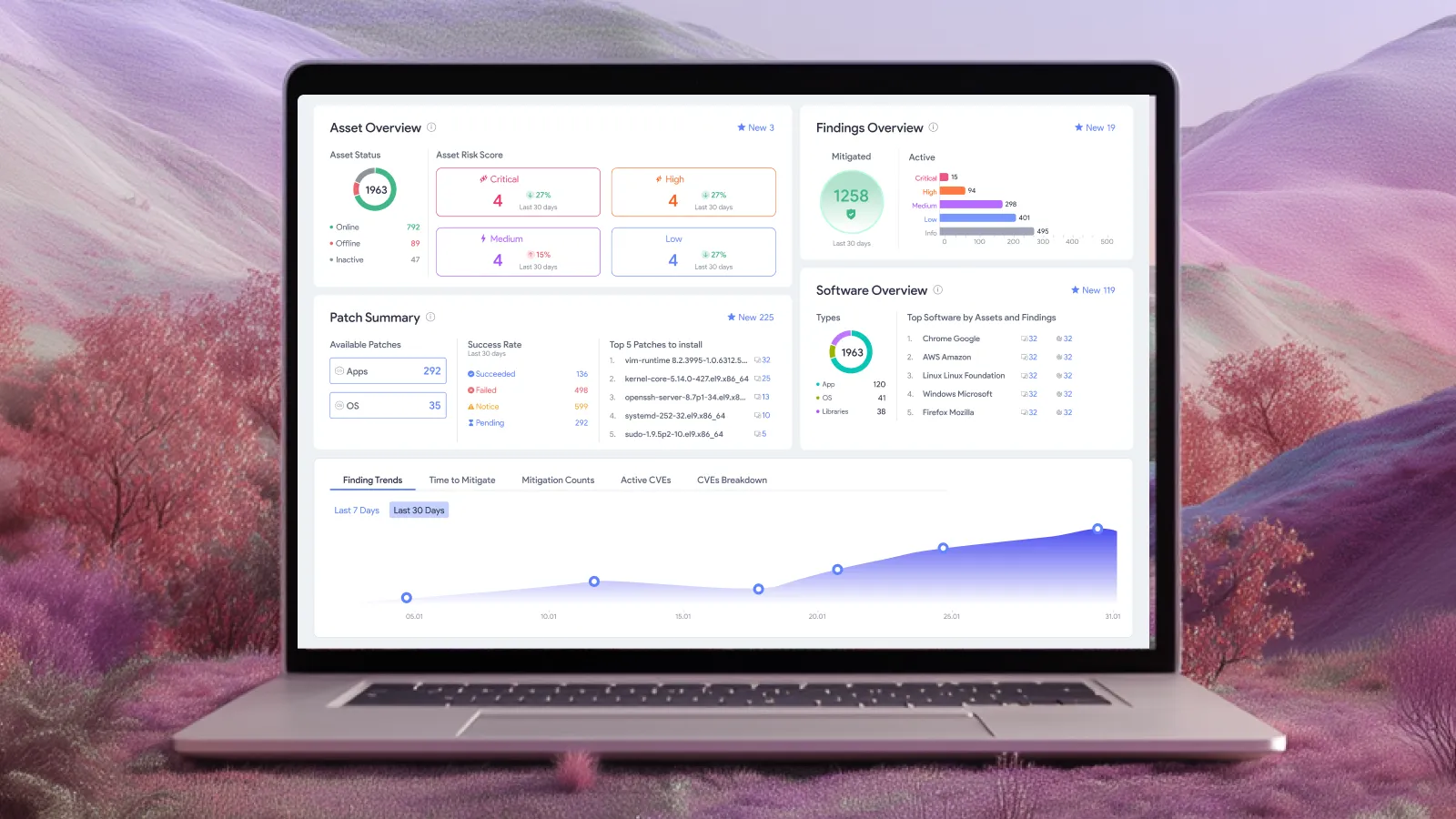
For recurring execution, vRx orchestration supports automatic actions governed by policies, schedules or rules, with approval where the team requires it. This provides the execution path for a tested correction applied to its approved scope.
Establish eligibility and expected results before enabling the recurring policy. Routine eligible cases can then run under that authority. Unclear asset roles, conflicting requirements and changes to the correction itself deserve separate review.
Be specific when testing. Confirm that the same input produces the intended state on the population covered by the policy. A successful test on a general-purpose workstation does not establish suitability for a service host with a different baseline.
A scoped configuration-fix example
Consider a hypothetical organization with ordinary workstations and dedicated document-processing hosts. Its workstation baseline requires a particular service to be disabled. The document-processing role requires that service and uses a separately approved configuration.
The team prepares a correction for the workstation population. Its applicability statement names the supported platform, workstation role and relevant baseline version. The dedicated hosts remain governed by their own baseline. This prevents the correction from treating a required service as an identical defect everywhere.
In testing, the team checks the starting value, applies the change, reads the effective state and confirms the expected workstation functions still work. It also tests an asset that should be excluded. A scope test should prove that an ineligible host is left alone, not merely that an eligible host changes successfully.
Once accepted, the correction becomes a routine automated action for that defined population. The operator's work moves to exceptions: a newly discovered dependency, a host with an uncertain role, or a result that does not match the expected state.
If a workstation later becomes a document-processing host, review its baseline assignment during that role change. Otherwise, two legitimate policies may repeatedly impose incompatible values. The solution is a clear destination baseline and authority for the transition, rather than continually suppressing the resulting alerts.
Make validation specific to the intended state
Define completion before deployment. A useful acceptance rule names the effective value, the baseline version it satisfies, and any service check needed to show that the correction preserved the asset's function.
Execution history provides evidence that an action ran. Pair it with a check of the resulting state. The two records answer different questions: what the automation attempted, and whether the asset now meets the intended requirement.
In the example, the workstation check should confirm that the service is disabled under the applicable baseline. The dedicated-host check should assess its own approved value. Combining those results into one undifferentiated pass rate would hide whether the right standard was used.
Keep unresolved cases visible. An offline asset has not demonstrated a corrected state. An excluded asset is not automatically compliant. A permitted alternate value needs its own justification. These distinctions make the report useful to the team deciding what still needs remediation.
Change the baseline without losing the automation boundary
Version the applicability decision alongside the correction. When a baseline changes, compare the new requirement with the population and tests that authorized the existing policy. Identify whether the target value, supported platform or permitted exception has changed.
Revalidate the affected scope before broadening execution. For example, support for a new operating-system release should include testing on that release. Adding a new service role should include its dependencies. A familiar setting name is not enough to establish that the old correction is suitable.
Choose a manageable first population rather than waiting for every asset classification to be perfect. Automate a well-understood correction where the role and target state are clear. Keep uncertain populations visible with an owner for resolving them. This lets remediation advance while preserving a defensible scope.
Frequently asked questions
Should every asset use the same security baseline?
Use a shared baseline where the assets have compatible requirements, and define approved differences where roles require them. The recommended test is whether the target configuration supports both the security requirement and the asset's intended function.
Can configuration remediation run automatically in vRx?
Yes. vRx documents policy-, schedule- and rule-based automatic actions. Establish the correction's approved target population and expected result before putting recurring execution into operation.
Does generating a script establish its baseline applicability?
The applicability decision should come from the organization's approved baseline and asset role. Supply that context when preparing the script, then review and test the correction against the intended population before reuse.
What evidence should close a configuration finding?
Require evidence that the asset meets its applicable target state after the action, together with the execution record and any necessary service check. Preserve the baseline version so a later reviewer can understand what passed.
Put a scoped correction into operation
Bring one recurring configuration weakness and its approved target population to a vRx demo. Explore how scripting and policy-driven execution can turn that correction into repeatable remediation.