Know your exposure always
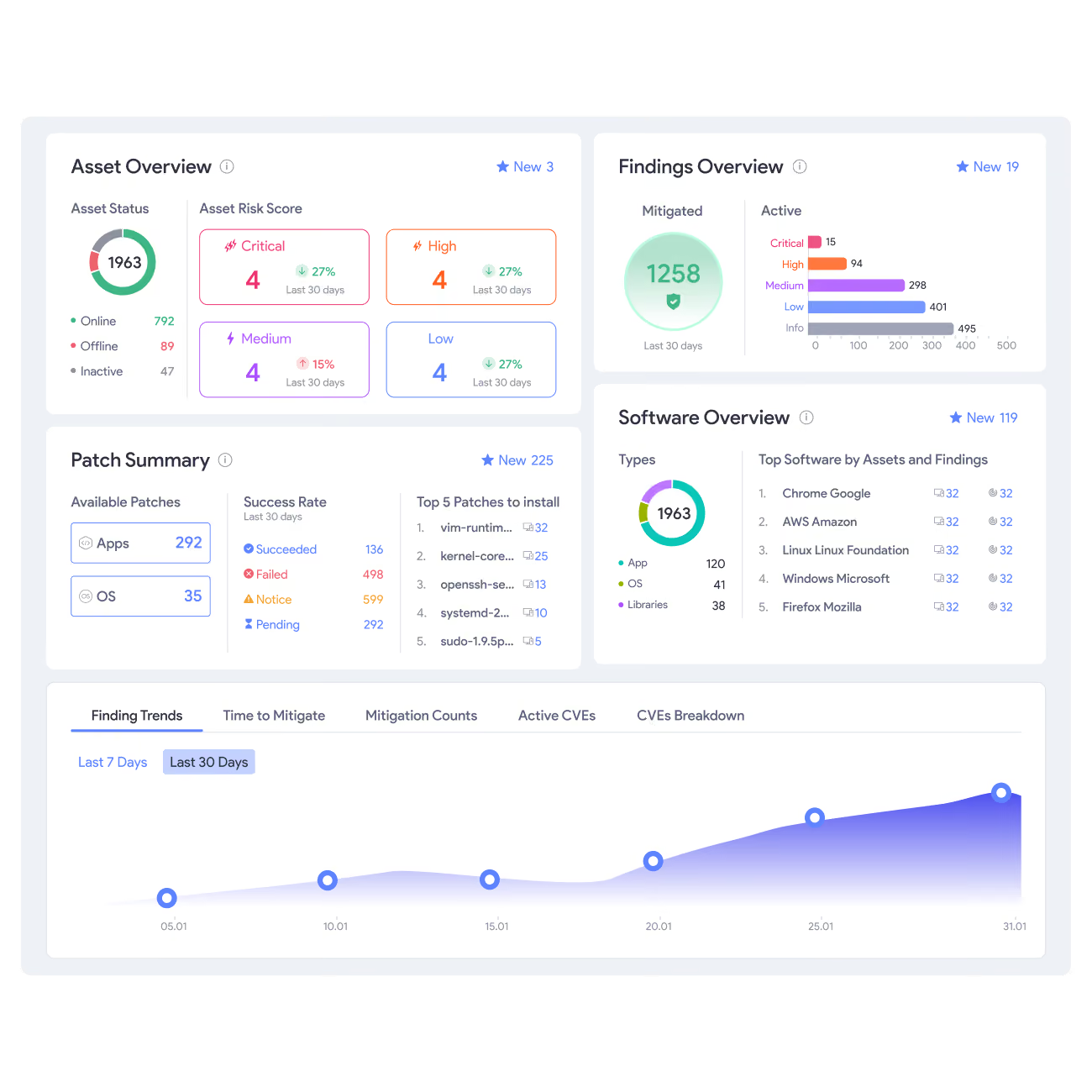
A scan runs. A report lands. By the time the team triages it, the threat landscape has already moved. Vicarius gives security teams and CISOs a live exposure picture that updates continuously, so decisions are based on what is exploitable today, not last week's snapshot.






































































.png)

















Challenges

Too much data, no clear picture

Patches stall between departments

No way to know If exposure is real

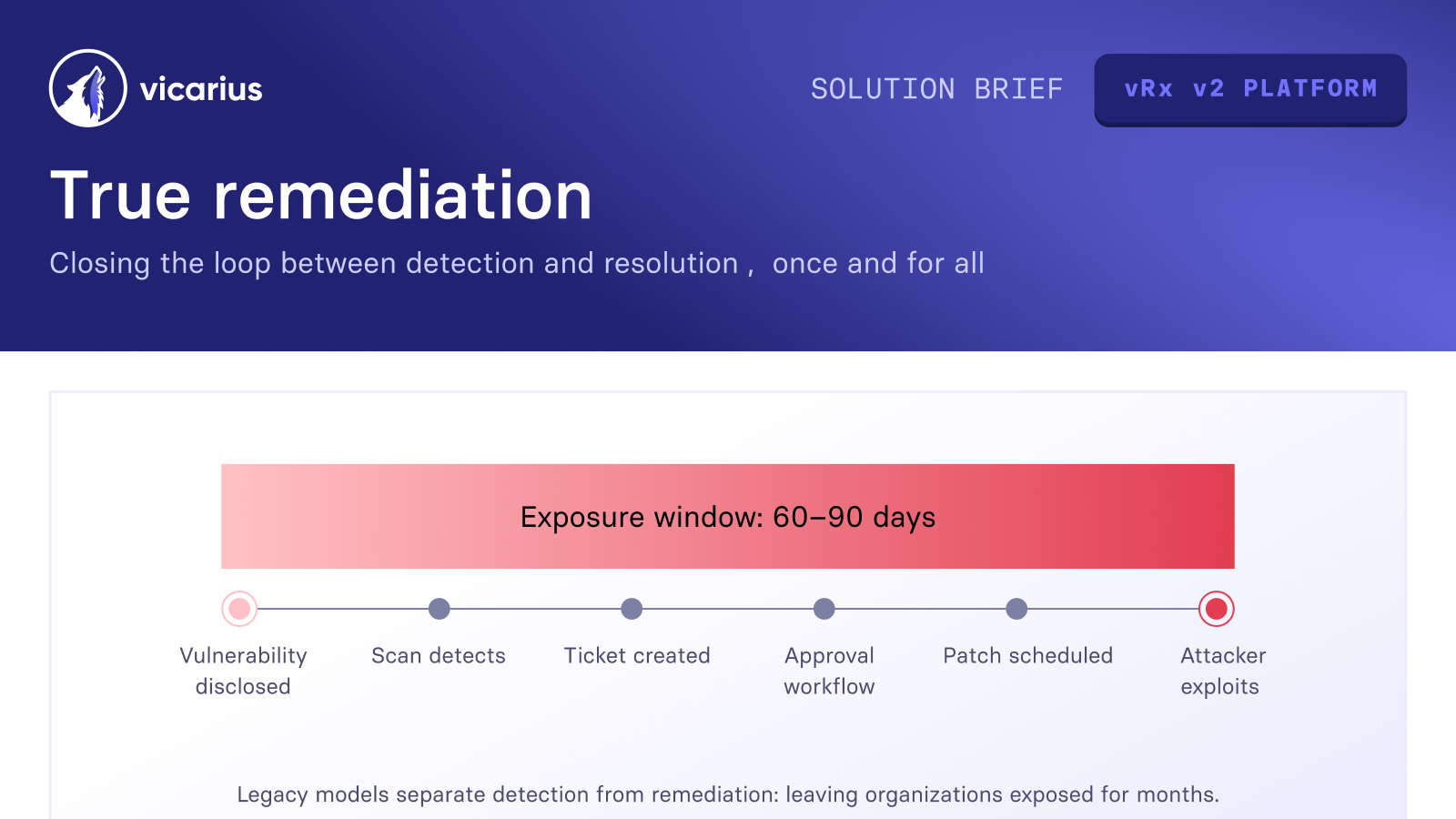
Remediation happens, exposure stays
Benefits

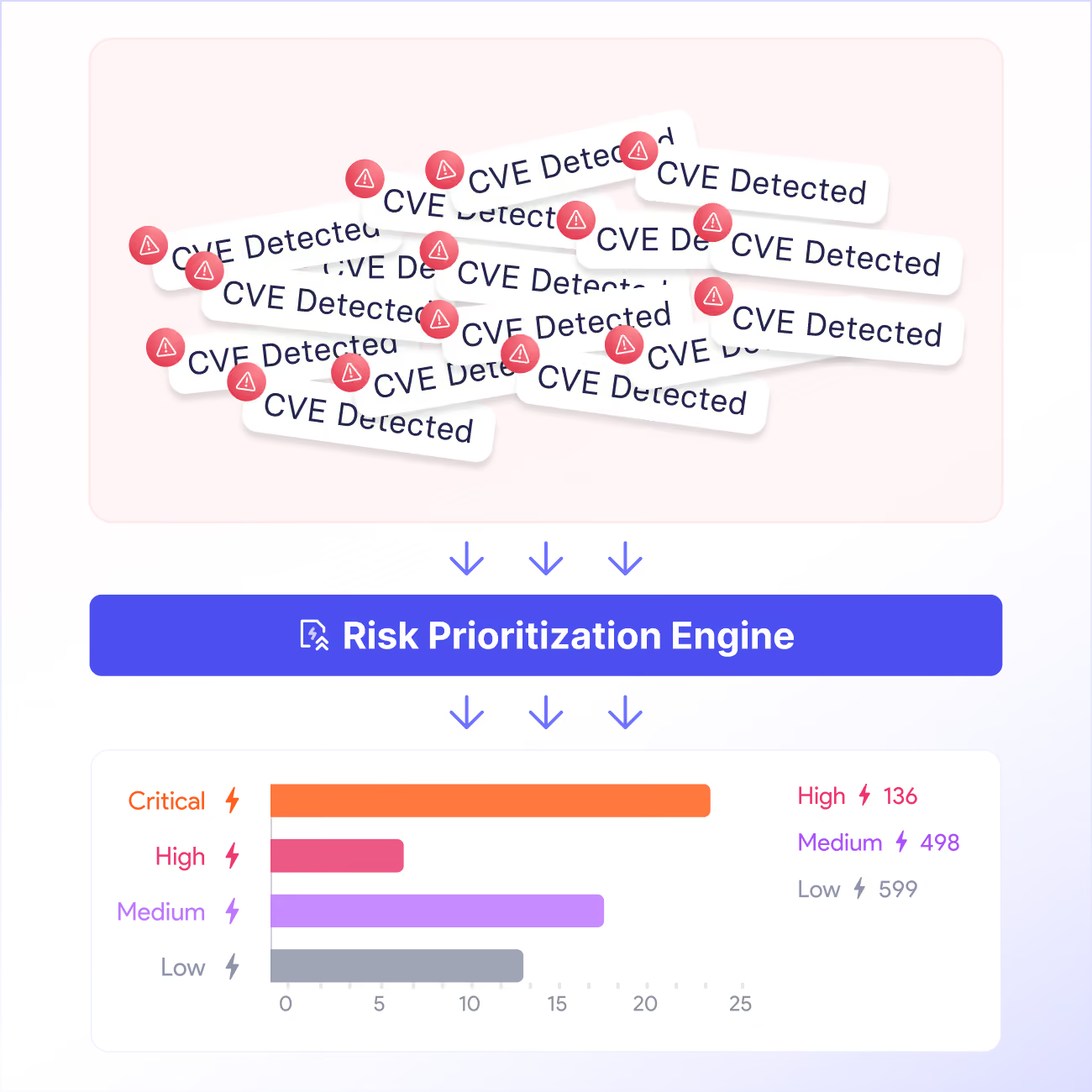
Stop chasing findings that do not matter
Your team stops triaging thousands of scanner alerts and focuses on the small subset that represent real, exploitable risk in your environment, cutting noise before it burns out the people responsible for fixing things.

Report risk with confidence
CISOs walk into board meetings with confirmed exposure reduction data. Not a scan report that lists what was found, but evidence of what was closed, validated, and no longer reachable by an attacker.

Remediation that does not wait on a window
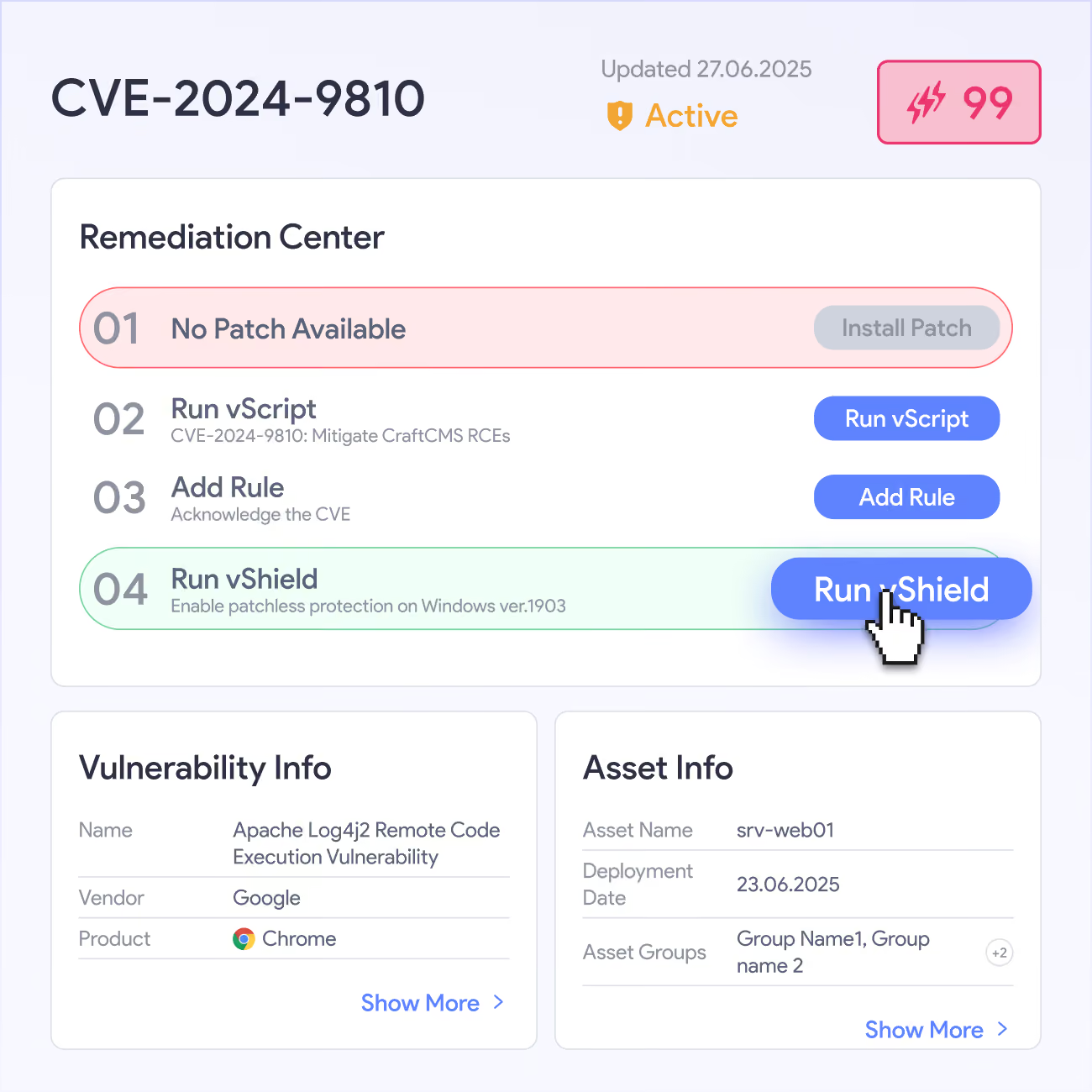
Security teams stop being held hostage by IT patch schedules. Critical exposures get contained the moment they are confirmed, without requiring a maintenance window or a reboot.

Know your exposures reduced
Security teams stop assuming remediation worked and start knowing it did. Every fix gets confirmed at the asset level, so the exposure picture reflects reality, not the last time someone ran a scan or closed a ticket.
Capabilities












Hear from our Customers
All in one platform



From urgency to strategy

EL AL secures global Patch Compliance


Complete Vulnerability Remediation Platform
Valuable resources saved

Third-party software patching is the most valuable feature.

Single source of truth, capable of handling any application in our fleet
60% faster remediation, many hours saved
Great patching capabilities, helpful dashboard, and excellent support

My favorite feature is Patchless Protection


Unified vulnerability discovery, prioritization, and remediation

Patchless Protection is an incredible technology!

Merge Security & IT to Remediate Threats


Explore Solutions
Got Questions?
How do security teams stop wasting time on vulnerabilities that will never be exploited?
Most vulnerability programs prioritize by CVSS severity score alone, which treats thousands of theoretical findings as equally urgent. The result is a team that triages endlessly and remediates slowly. Vicarius vScore combines CVSS, EPSS exploitation probability, and CISA KEV data with asset context to cut false positive noise by 95%. But even after that reduction, a meaningful number of vulnerabilities remain. Vicarius vIntelligence closes that final gap using active agentic exploit simulation, testing each remaining vulnerability within your network environment to confirm exactly which ones are exploitable right now, giving practitioners a list they can act on with certainty, not probability.
Why do critical vulnerabilities stay open for weeks even when security teams know about them?
The most common reason is not negligence. It is a structural gap between two departments with different priorities. Security measures risk. IT measures uptime and change-stability. Vicarius removes the standoff by containing the exploit path the moment a vulnerability is confirmed, giving IT the time it needs to schedule a proper patch without leaving the organization exposed in the meantime.
How can a CISO prove to the board that the security program is reducing risk?
Scan reports show what was found. They do not show what was closed. Vicarius vIntelligence validates remediation at the asset level, confirming that each vulnerability is no longer exploitable in the specific environment. This gives CISOs confirmed exposure reduction data to present, not ticket closure rates, turning a reactive report into a defensible measure of program effectiveness.
How does an organization know that a remediated vulnerability is gone and not just patched on paper?
Patch deployment and exposure closure are not the same thing. A patch can be deployed to the wrong asset version, fail silently, or miss a duplicate instance. Vicarius vIntelligence confirms the vulnerability is no longer exploitable after remediation, cutting false closure rates by 95% and giving security teams verified evidence that the exposure is gone, not assumed to be.
What is the difference between continuous exposure management and running more frequent scans?
Running scans more often produces more data but does not change the fundamental problem: the picture is still out of date the moment the scan ends. Continuous exposure management means the inventory updates as the environment changes, risk rankings update as threat intelligence changes, and remediation is validated rather than assumed. Vicarius vRx agent and vRadar deliver this as an always-current operational posture, not a reporting cycle.
Can exposure management work when security and IT operate on different patch schedules?
Exposure management with Vicarius is specifically designed for this reality. vShield Patchless Protection can be enabled within hours of a vulnerability being confirmed, without a patch and without a reboot. This means the organization is protected while IT manages its own maintenance schedule, removing the binary choice between deploying a patch immediately and accepting weeks of uncontained exposure.
How do practitioners maintain a clear exposure picture across Windows, macOS, and Linux environments?
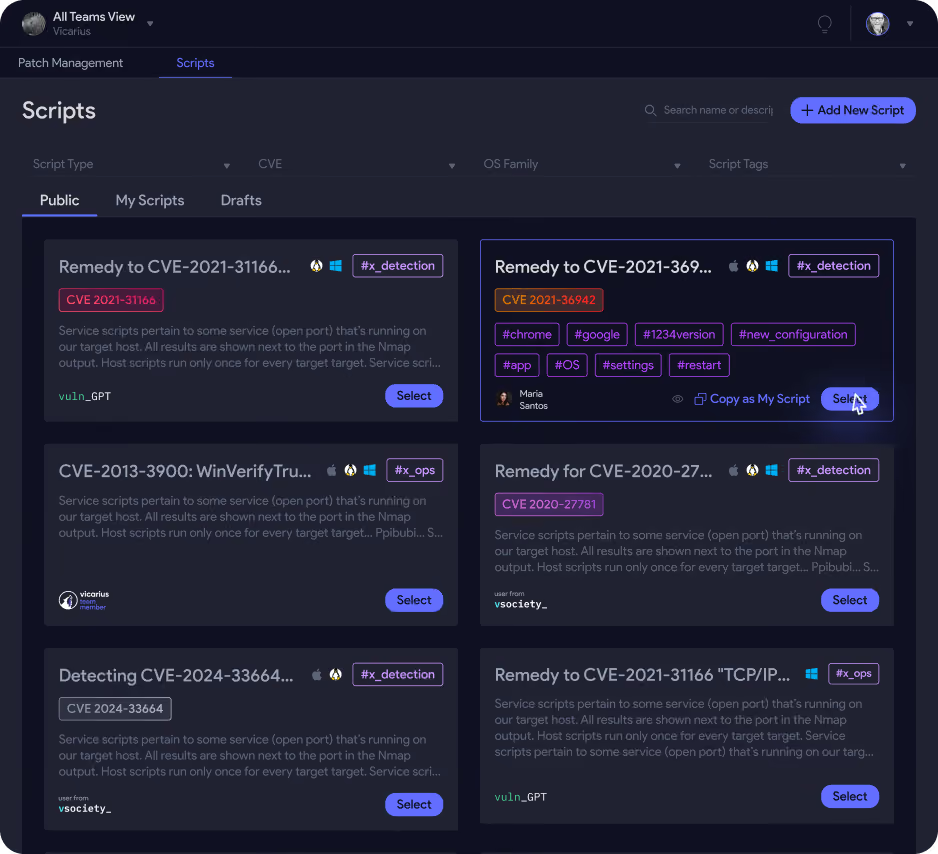
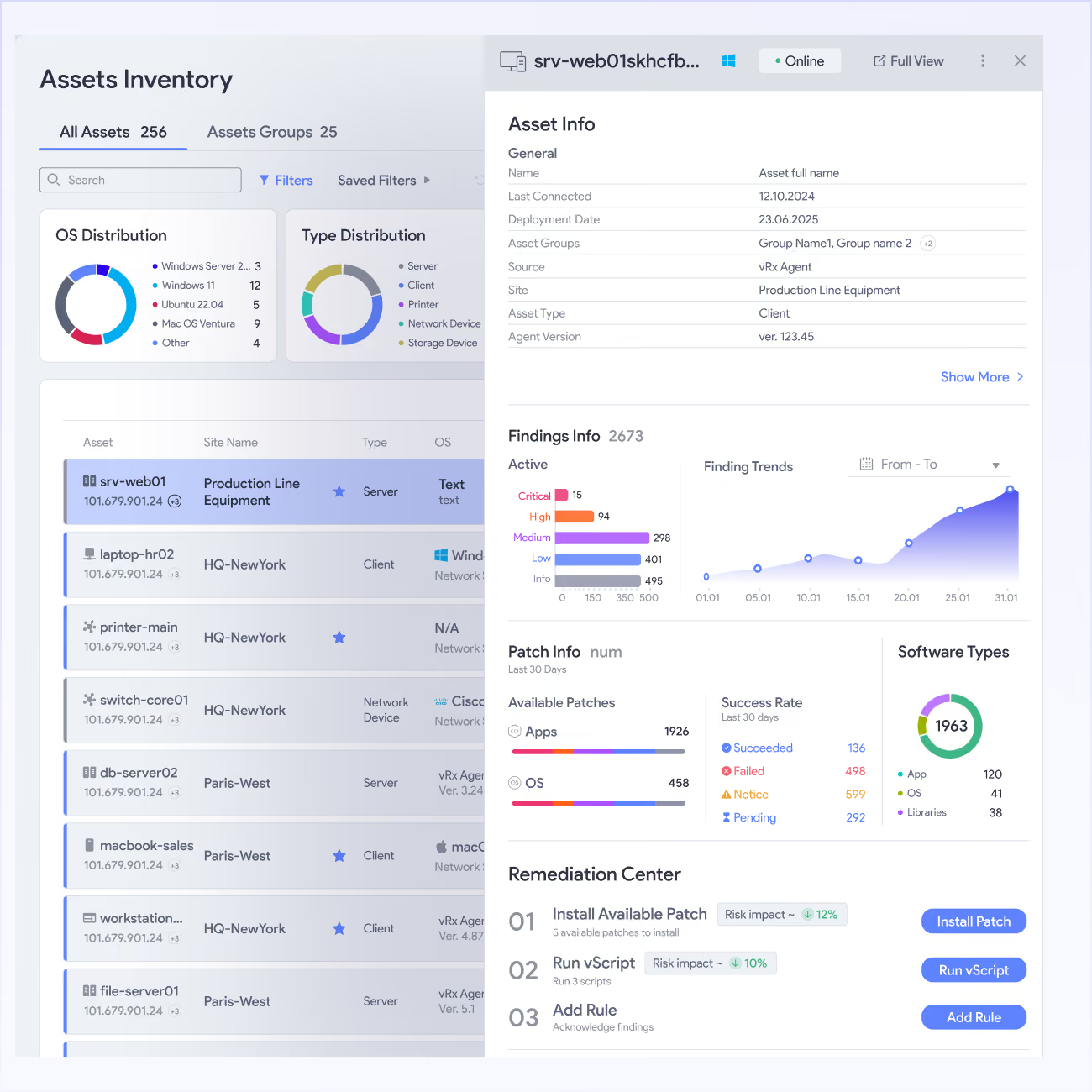
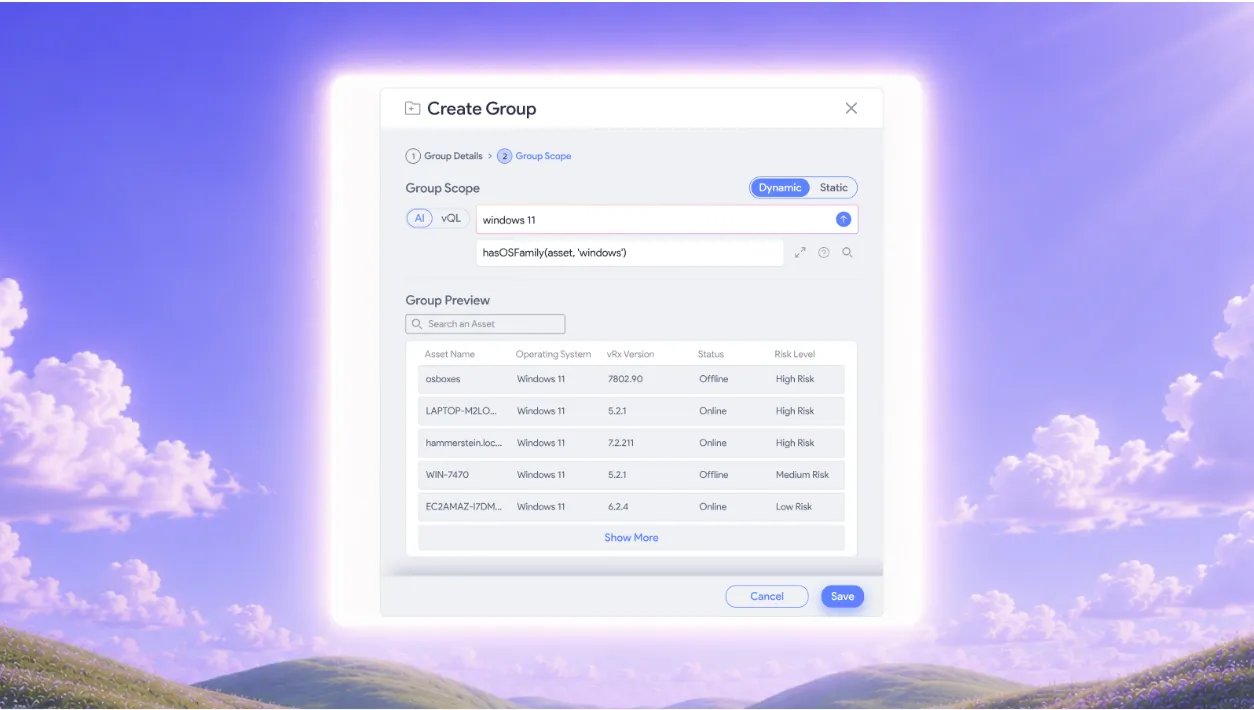
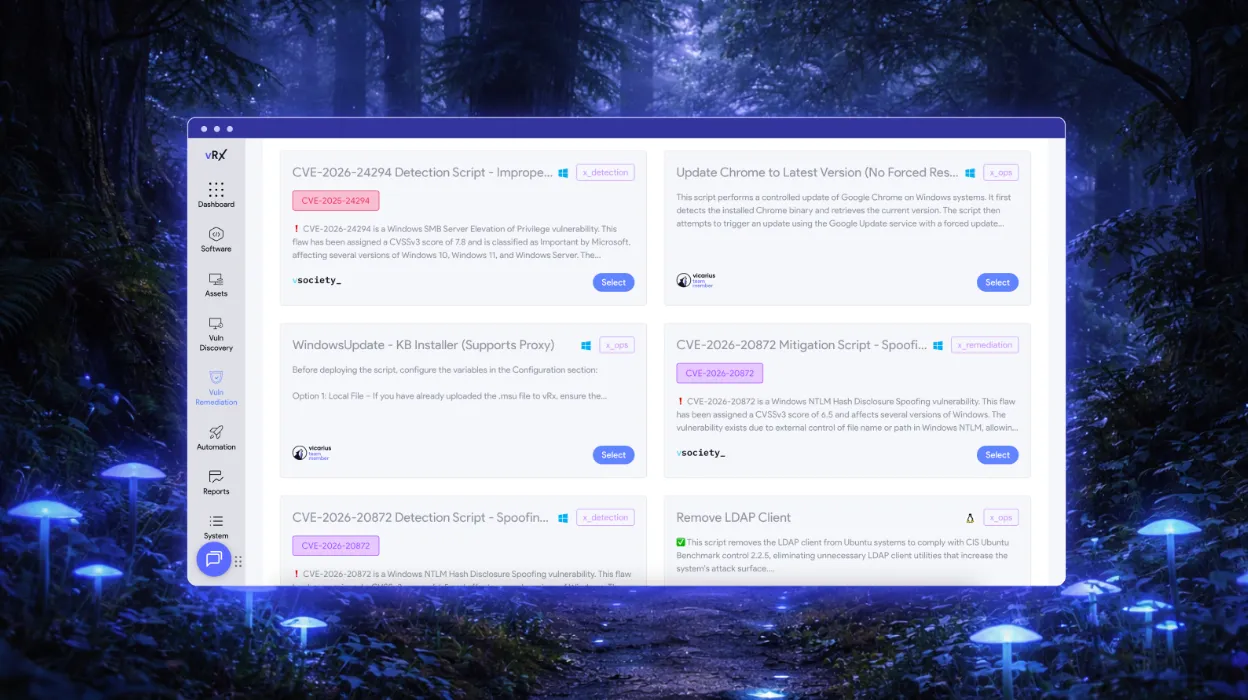
Vicarius vRx agent and vRadar discover assets, software, and vulnerabilities continuously across Windows, macOS, and Linux, covering 20,000+ third-party applications alongside operating system vulnerabilities. vScore prioritizes findings uniformly across all three platforms, and vPatch, vScript, and vShield Patchless Protection provide remediation options suited to each environment and vulnerability type, giving practitioners one workflow regardless of the underlying OS.

Start your free demo!