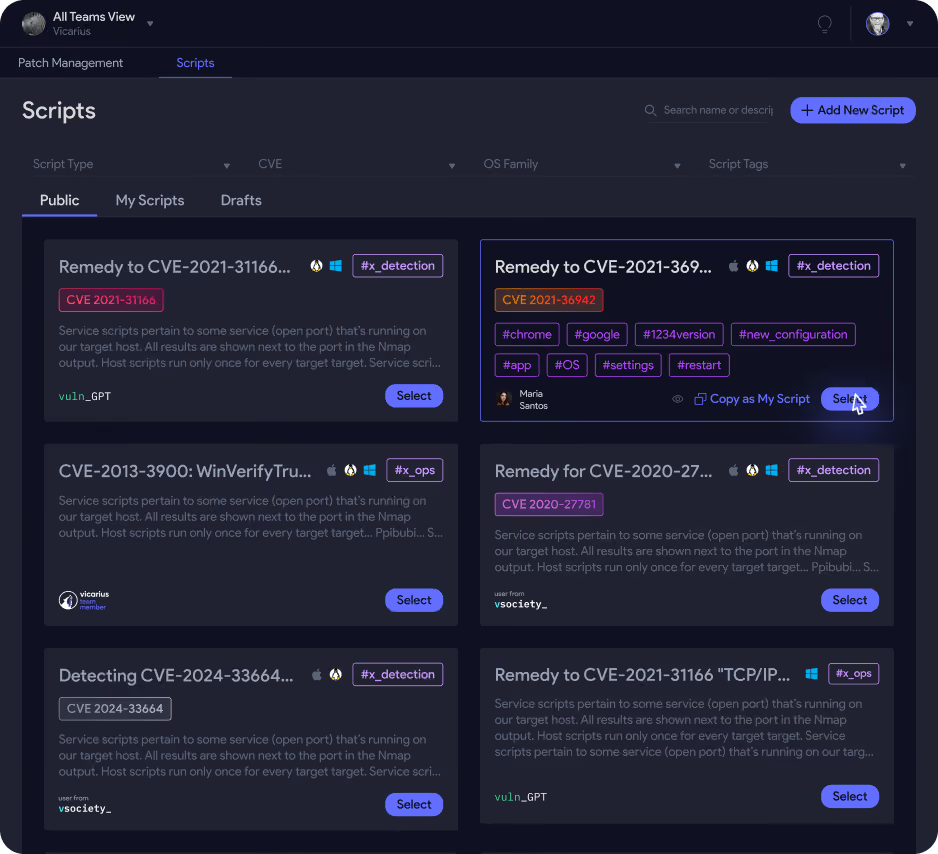
Reducing the risk without patching
Zero-days wait for no vendor. Legacy systems never get a patch. Production environments cannot afford a reboot. For every vulnerability that cannot be fixed on security's timeline, Vicarius closes the exploit path within hours, without touching the application.
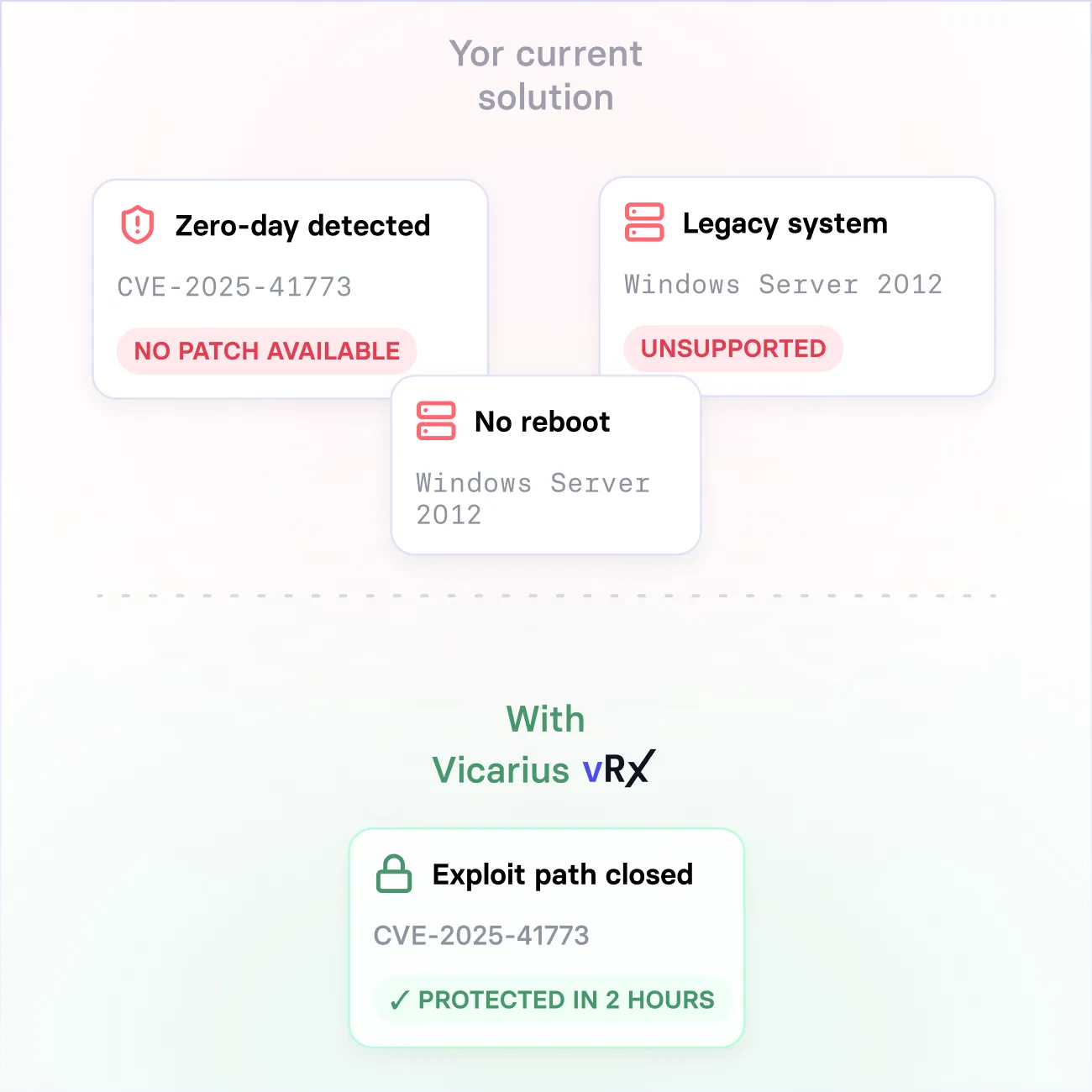
New vulnerabilities are introduced every day
on average to remediate
of exploited CVEs had a patch available before the attack







































































.png)

















Challenges

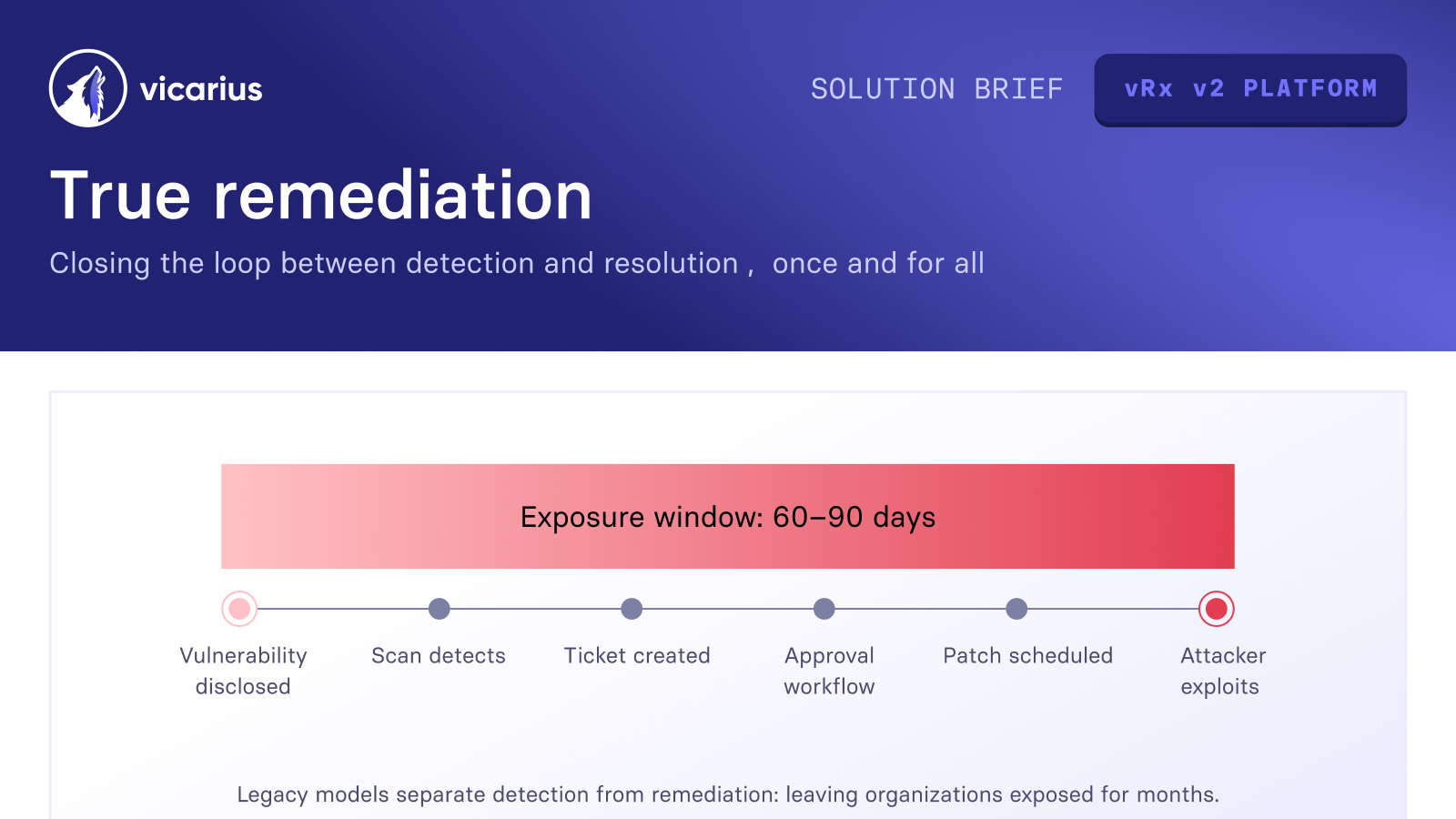
The Patch window is measured in weeks. Attackers move in hours.

Some systems were never meant to be patched

Change management protects uptime, not security

Every unpatched CVE is a documented entry point
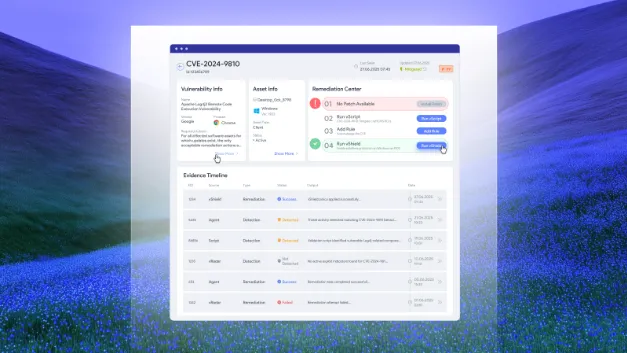
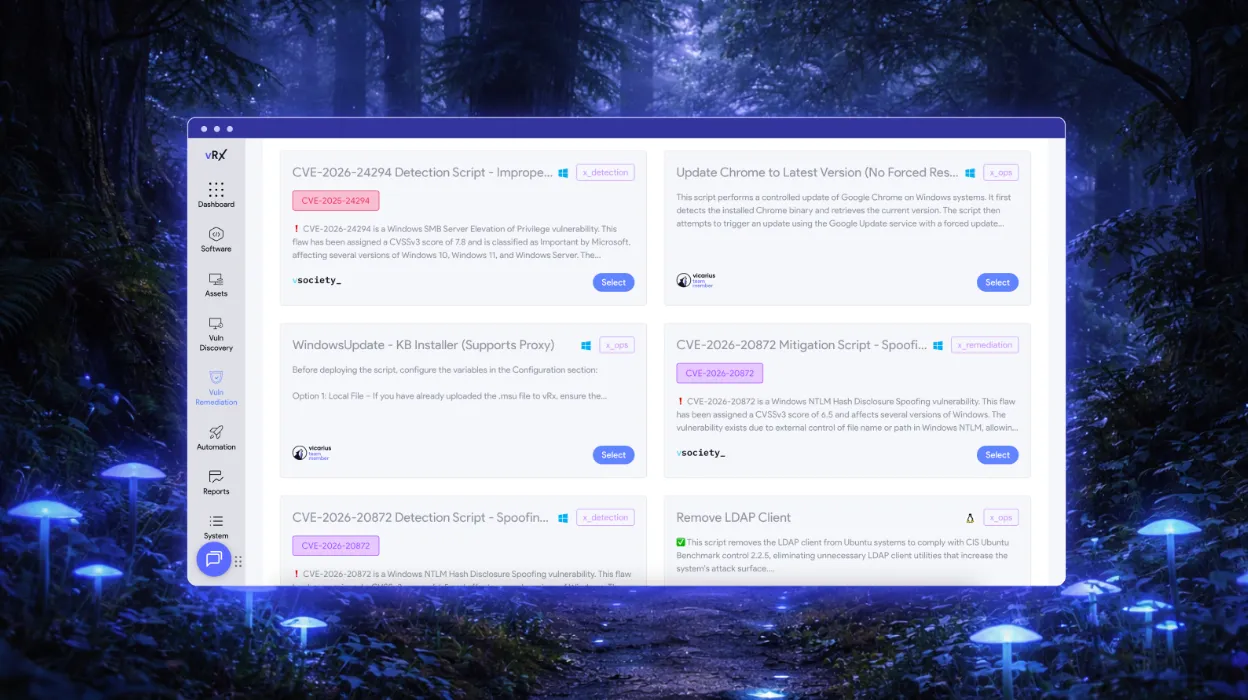
vRx is your full-stack remediation suite

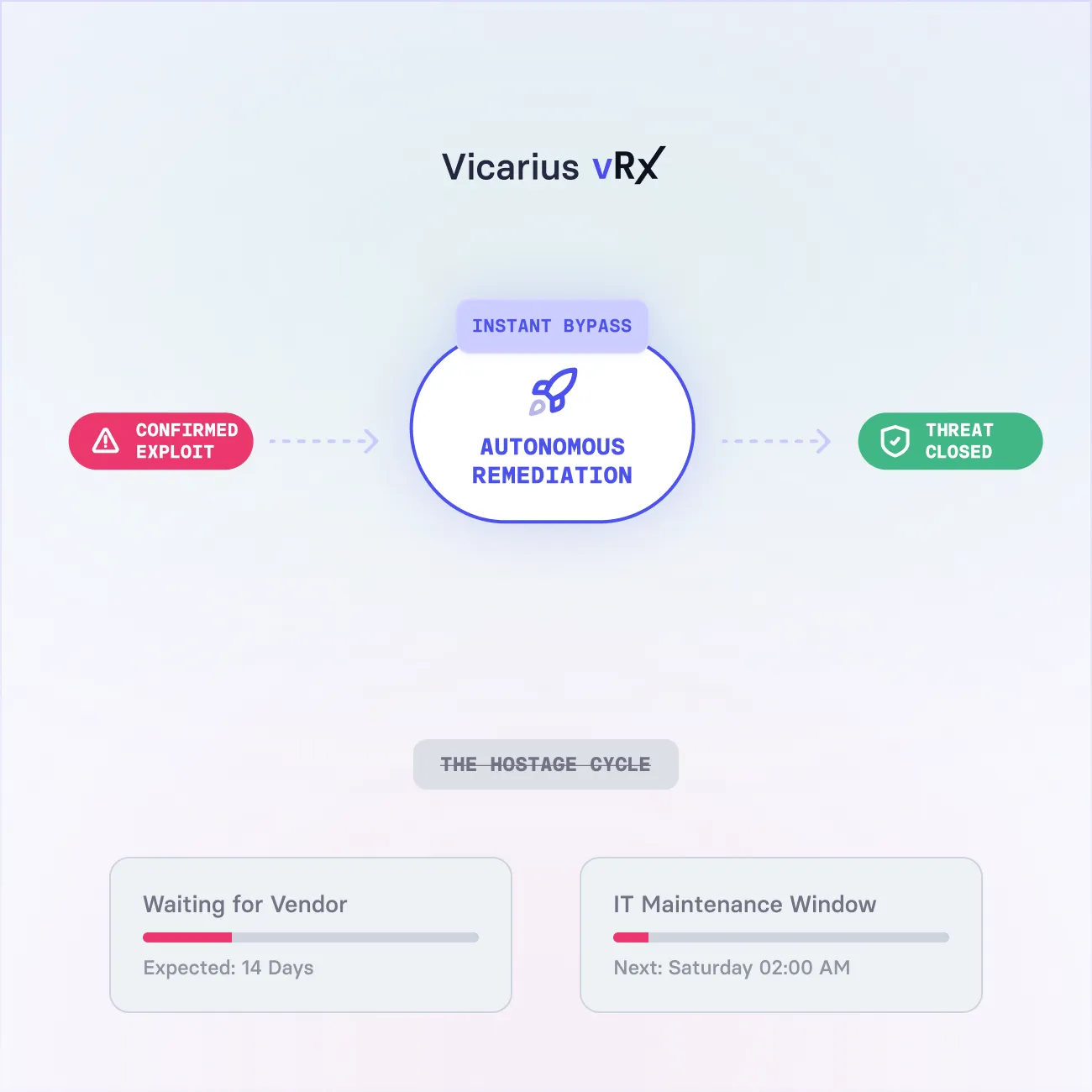
Stop being held hostage by the patch cycle
Known exploits get closed the moment they are confirmed, not when the vendor or IT is ready.
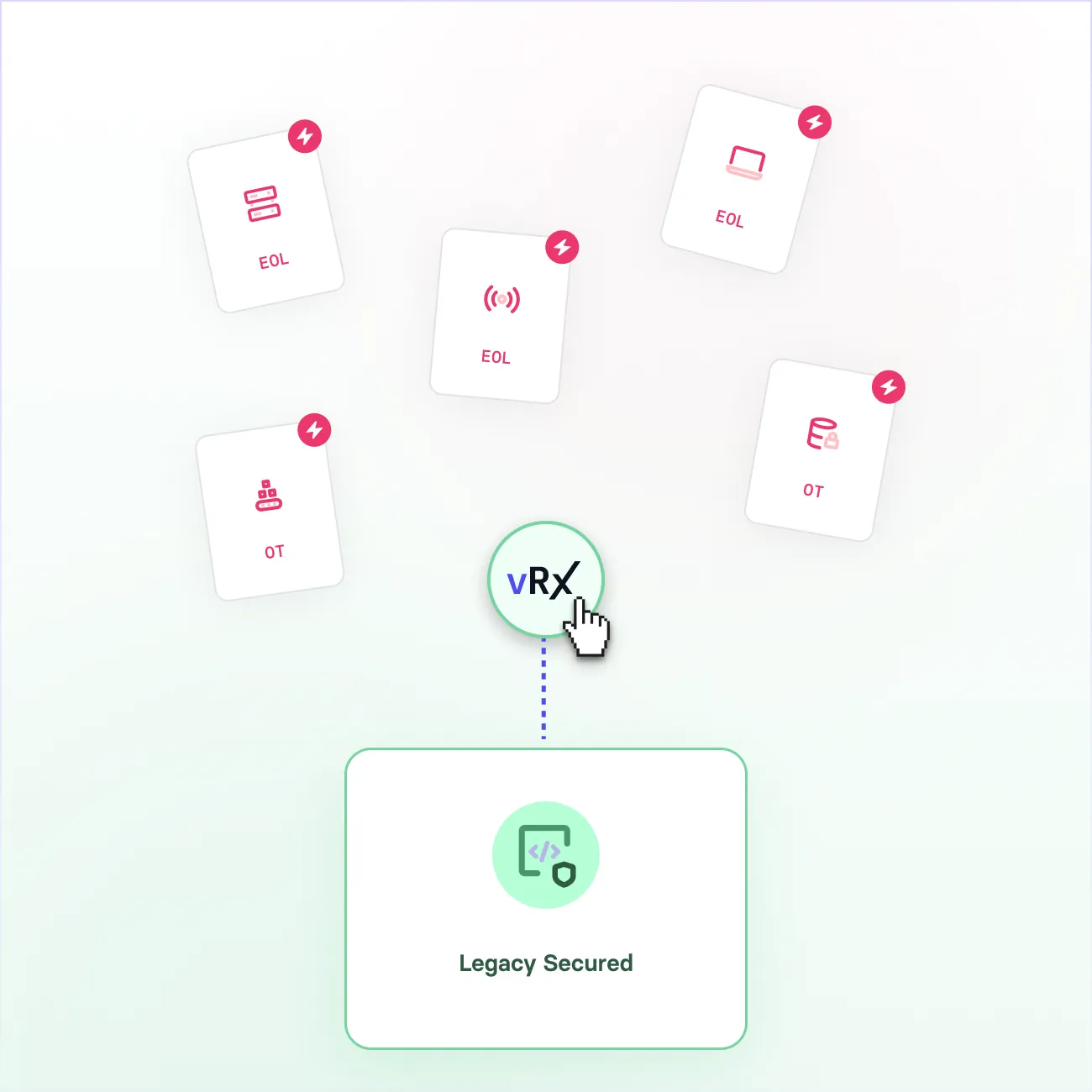
Legacy systems stop being a liability
End-of-life servers, abandoned applications, and OT devices stop being open doors attackers can rely on.
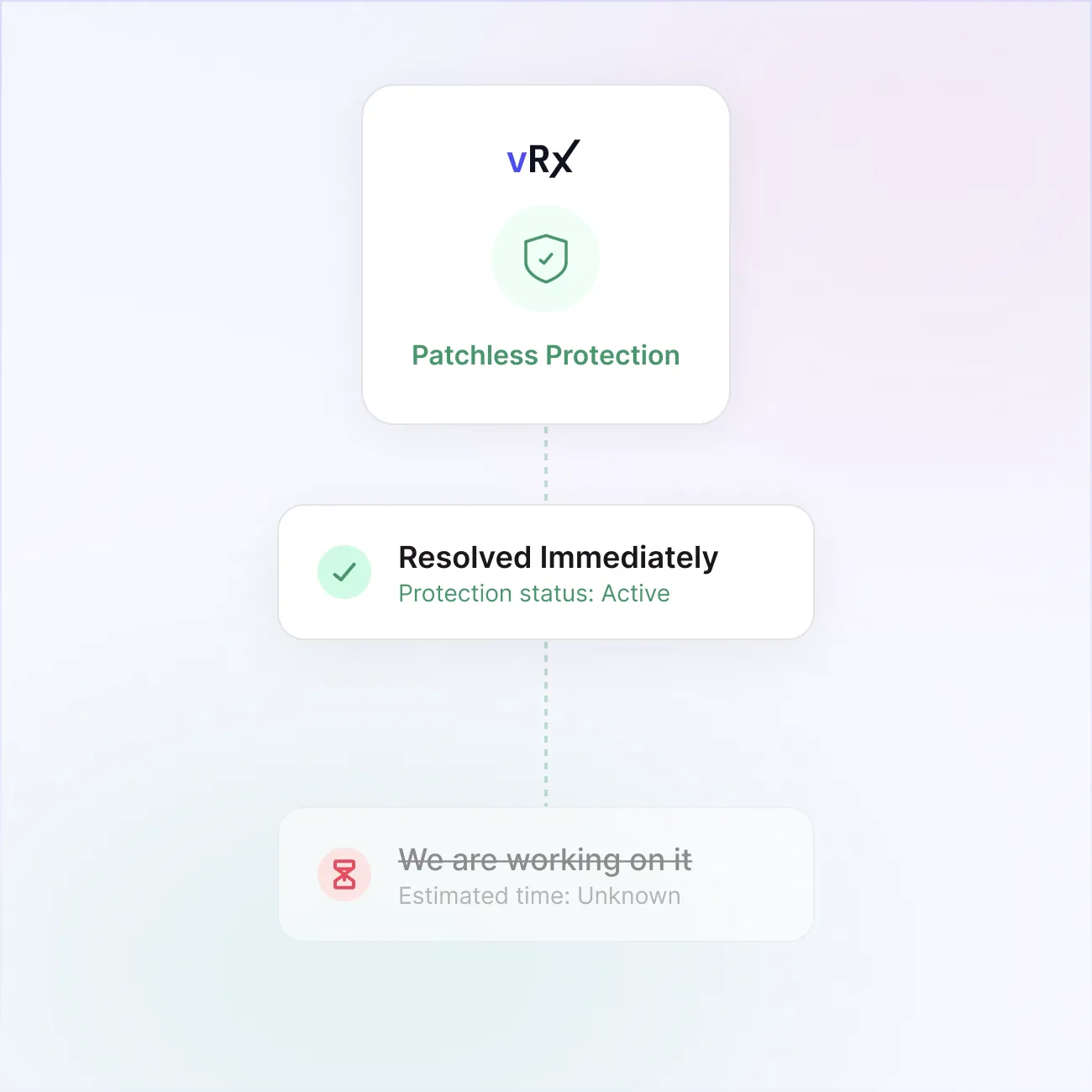
The board stops hearing "We are working on it"
When protection does not depend on a patch, the answer to the board changes immediately.
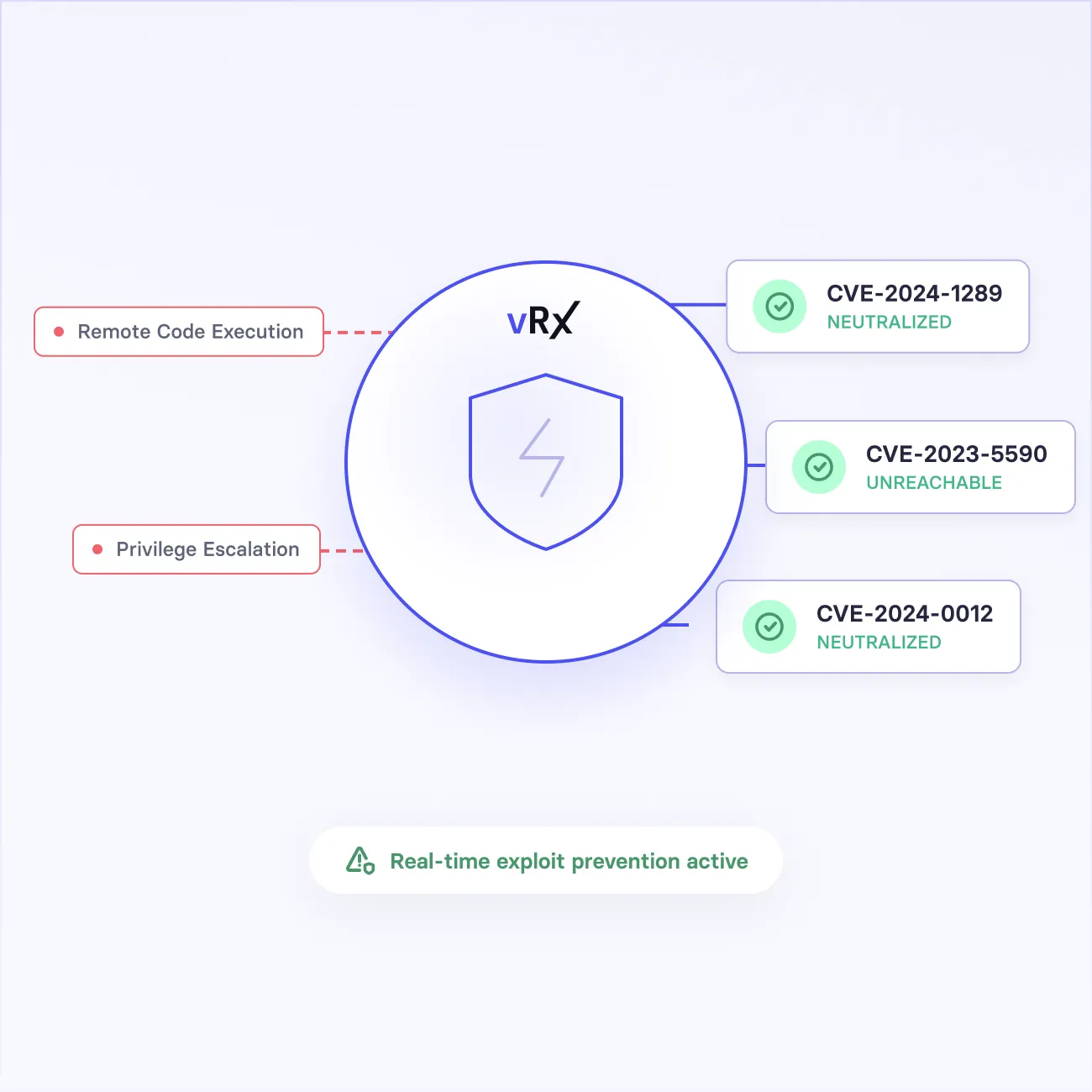
Known vulnerabilities stop being easy targets
When exploit paths are blocked, a documented CVE with no patch stops being an attacker advantage.
Capabilities














Hear from our Customers
All in one platform



From urgency to strategy

EL AL secures global Patch Compliance


Complete Vulnerability Remediation Platform
Valuable resources saved

Third-party software patching is the most valuable feature.

Single source of truth, capable of handling any application in our fleet
60% faster remediation, many hours saved
Great patching capabilities, helpful dashboard, and excellent support
My favorite feature is Patchless Protection


Unified vulnerability discovery, prioritization, and remediation

Patchless Protection is an incredible technology!

Merge Security & IT to Remediate Threats


Explore Solutions
Got Questions?
How can an organization protect itself from a zero-day vulnerability before the vendor releases a patch?
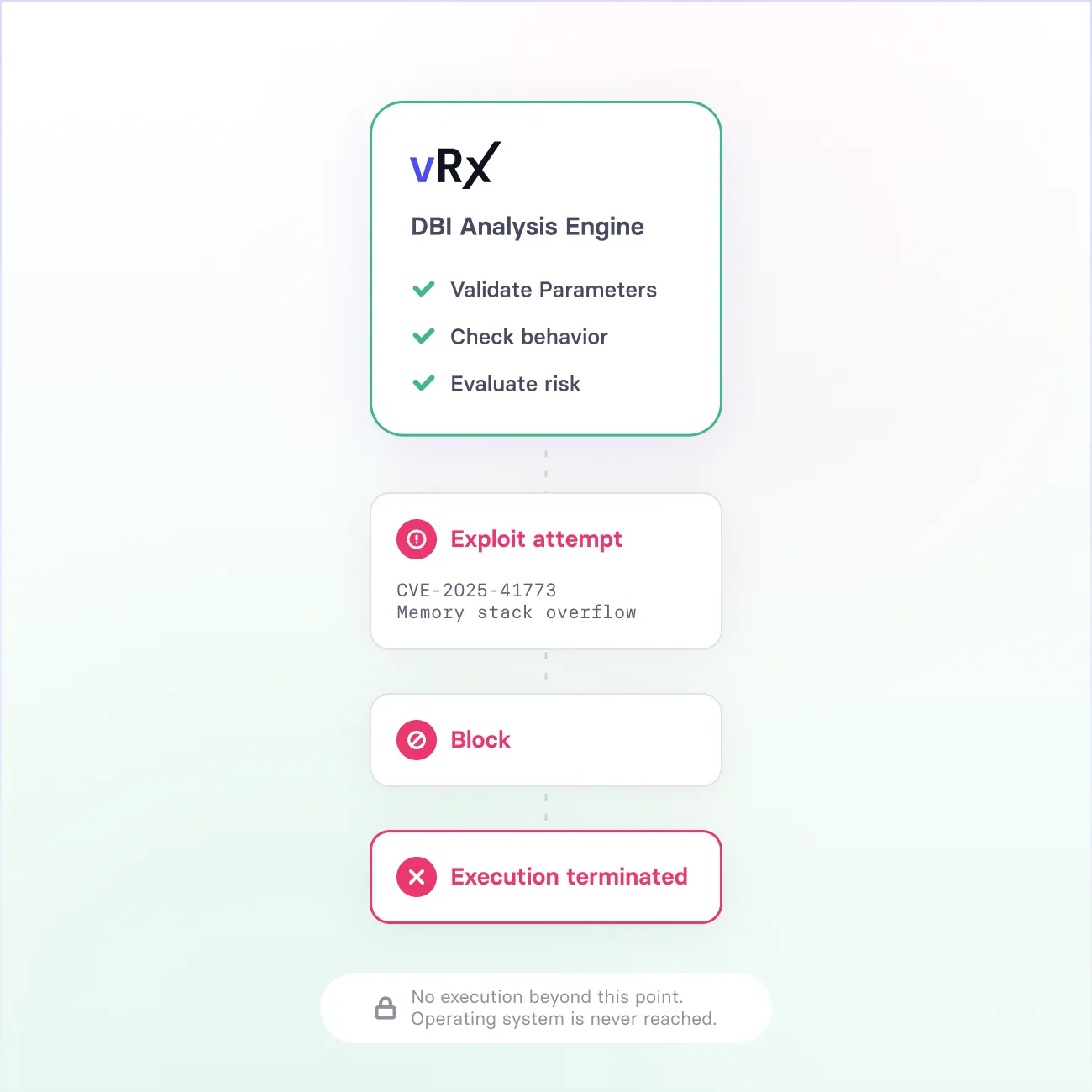
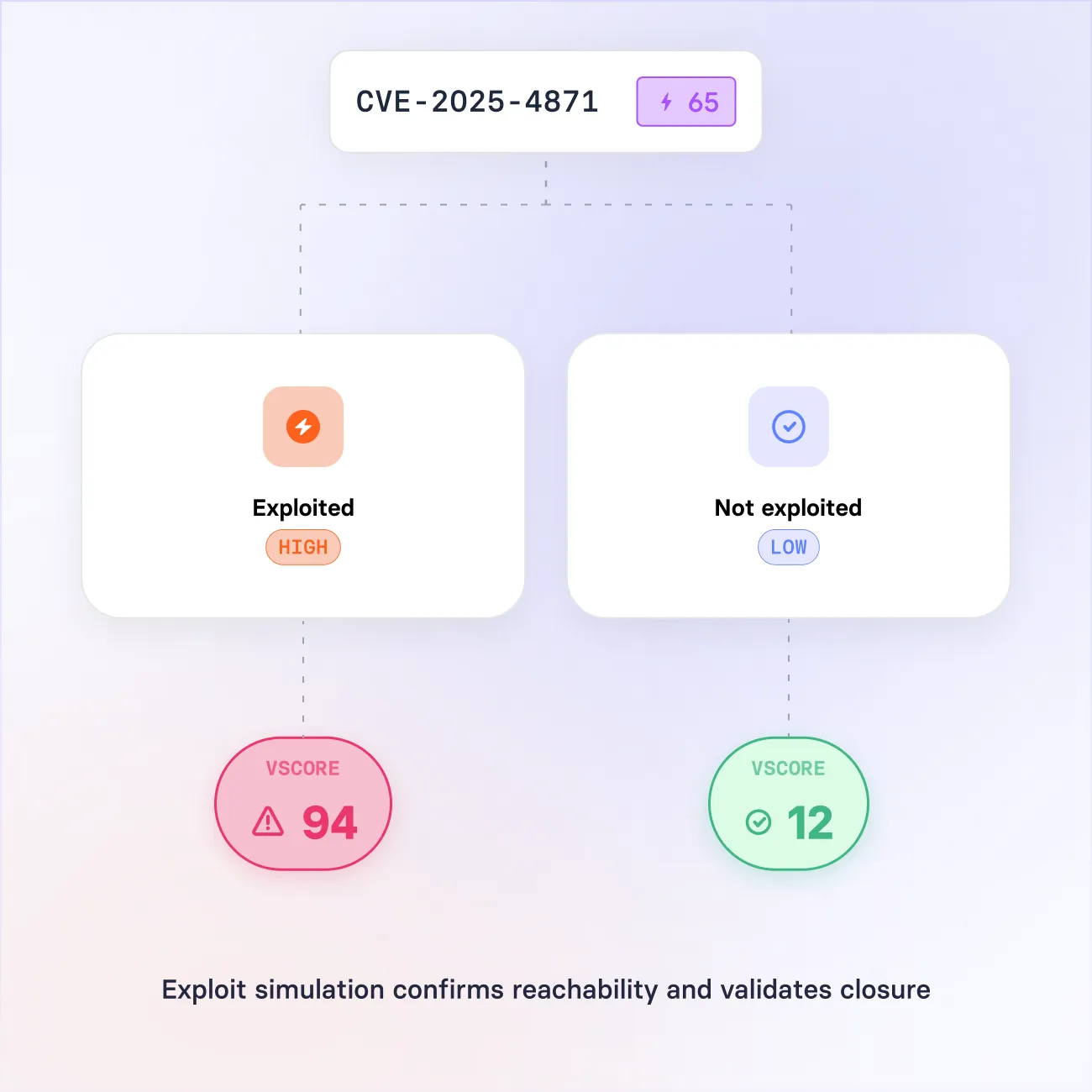
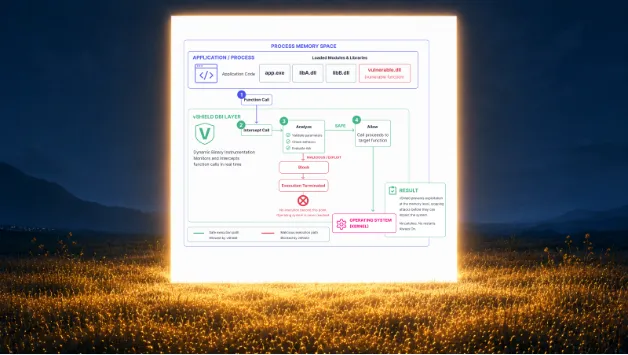
Vicarius vShield - Patchless Protection blocks the exploit path at the memory level using dynamic binary instrumentation within hours of a zero-day being confirmed exploitable. vIntelligence validates exploitability first using active exploit simulation, then vShield neutralizes the specific memory behavior the vulnerability uses, without modifying the application and without a reboot. The organization is protected before the vendor ships a fix.
What does patchless protection actually mean and how is it different from a compensating control?
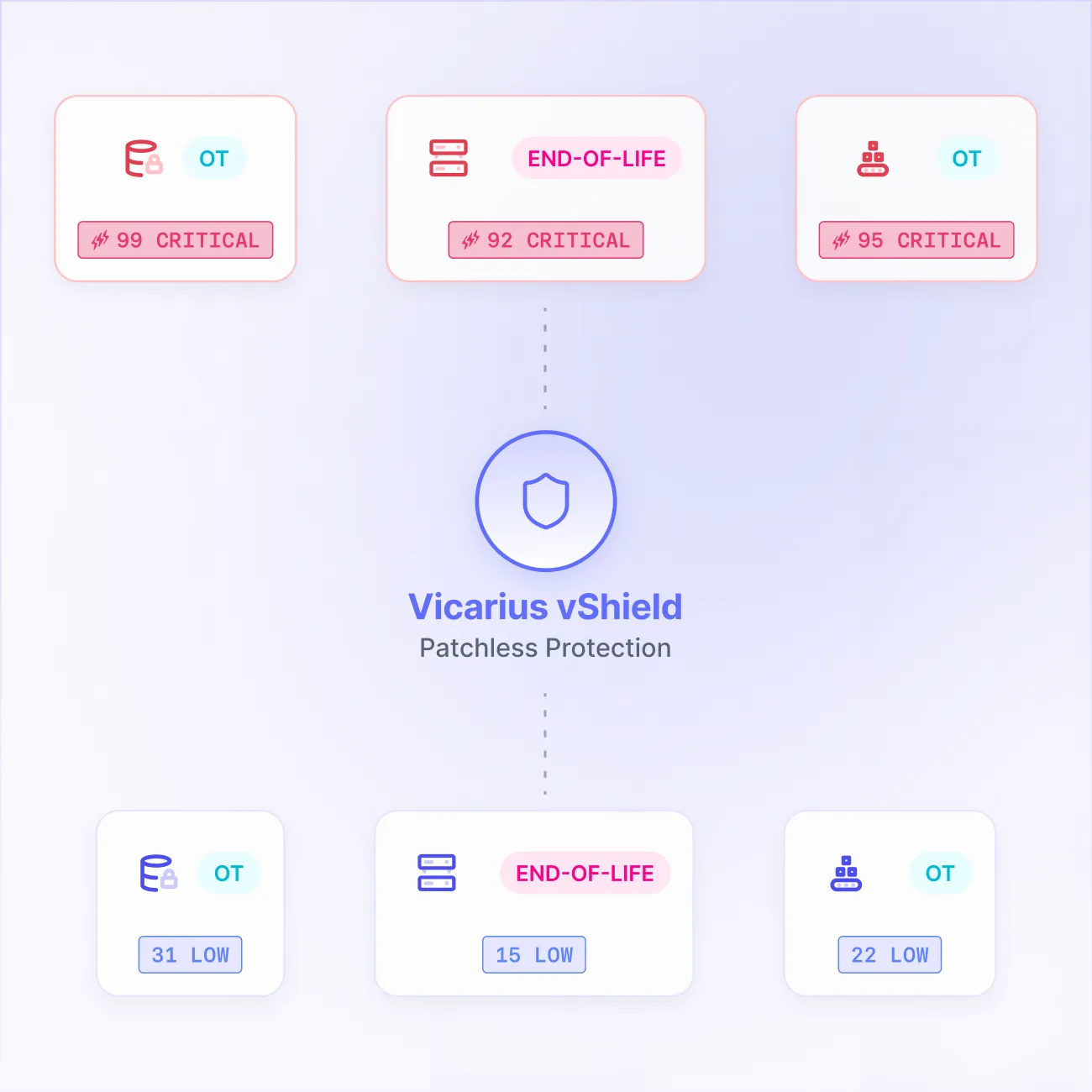
Patchless protection blocks the specific exploit path a vulnerability uses rather than reducing exposure around it. A compensating control such as a firewall rule or network segmentation limits access to the vulnerable system but does not stop the exploit if an attacker reaches it. Vicarius vShield uses DBI to neutralize the exploitable memory behavior directly, confirmed by vIntelligence exploit simulation before and after deployment.
Can Vicarius protect legacy systems and end-of-life software that will never receive a vendor patch?
Vicarius vShield Patchless Protection works on legacy operating systems and end-of-life applications that vendors no longer support. Because protection operates at the memory level rather than through application modification, it requires no vendor involvement, no compatibility testing, and no scheduled downtime, closing exploit paths on systems the standard patch cycle will never reach.
Does vShield patchless protection require a reboot or cause application downtime?
vShield activates without a reboot and without modifying the application binary. It intercepts the specific exploit behavior at the memory level while the application continues running normally. Production systems, critical infrastructure, and operational technology stay online throughout, making it suitable for environments where any downtime requires formal change approval.
How does Vicarius handle vulnerabilities that have no patch and cannot be fixed with a script?
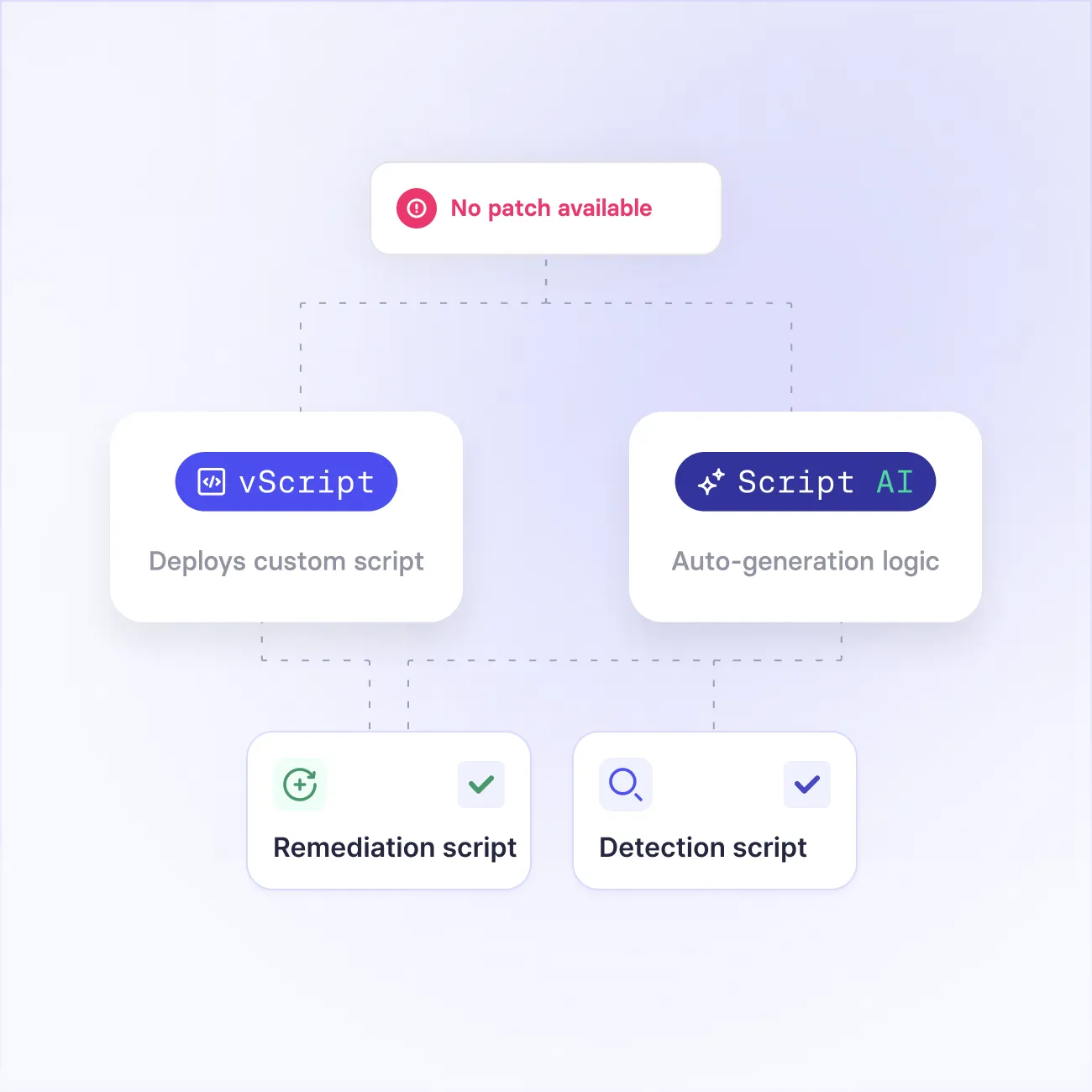
When a vulnerability has no vendor patch and no scriptable fix path, vShield Patchless Protection blocks the exploit path at the memory level until a remediation option becomes available. vIntelligence monitors the exploitability status continuously, so if the threat profile changes or a patch is eventually released, the security team is notified and can act with current information.
How does Vicarius confirm that patchless protection has actually closed the exploit path?
vIntelligence re-runs active exploit simulation after vShield deploys to confirm the attack path no longer works in the specific environment. This is not a theoretical check based on patch metadata. It is a live verification that the exploit behavior vShield blocked is no longer reachable, giving practitioners confirmed closure rather than assumed protection.
Does patchless protection work across Windows, macOS, and Linux including older versions?
Vicarius vShield Patchless Protection works across Windows, macOS, and Linux, including legacy and end-of-life versions that no longer receive vendor security updates. vRx agent and vRadar identify the affected assets across all platforms, vIntelligence validates exploitability in the specific environment, and vShield blocks the exploit path without a patch, without a reboot, and without application modification.

Start your free demo!