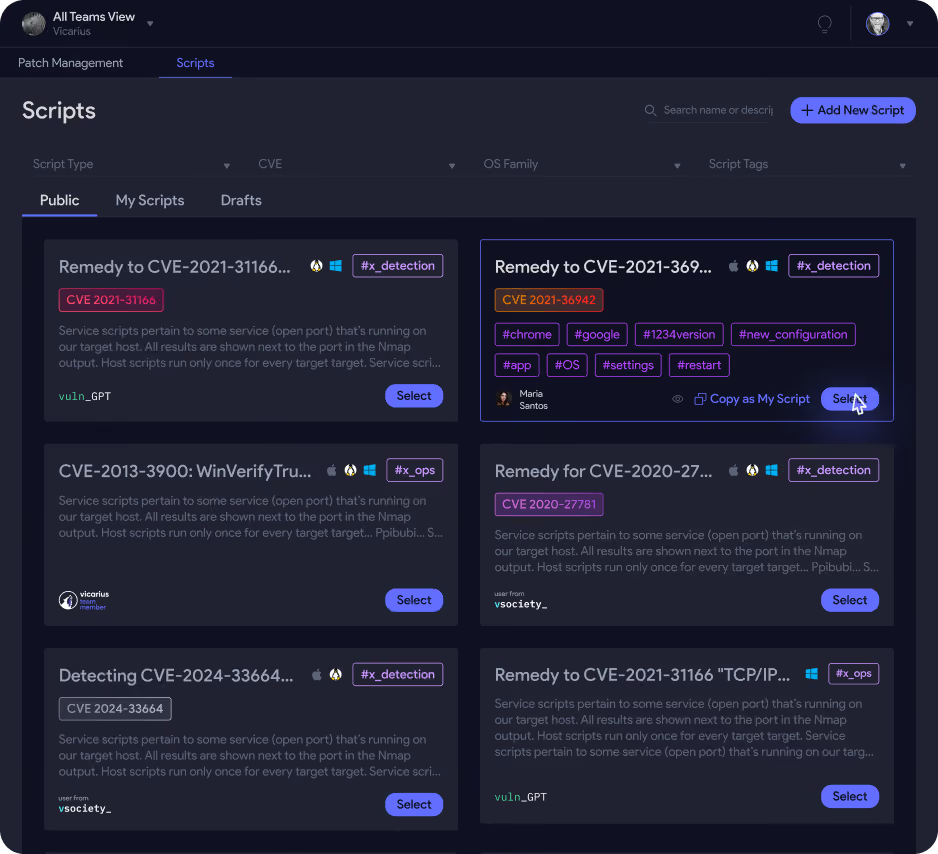
See every vulnerability. Prove you fixed it.
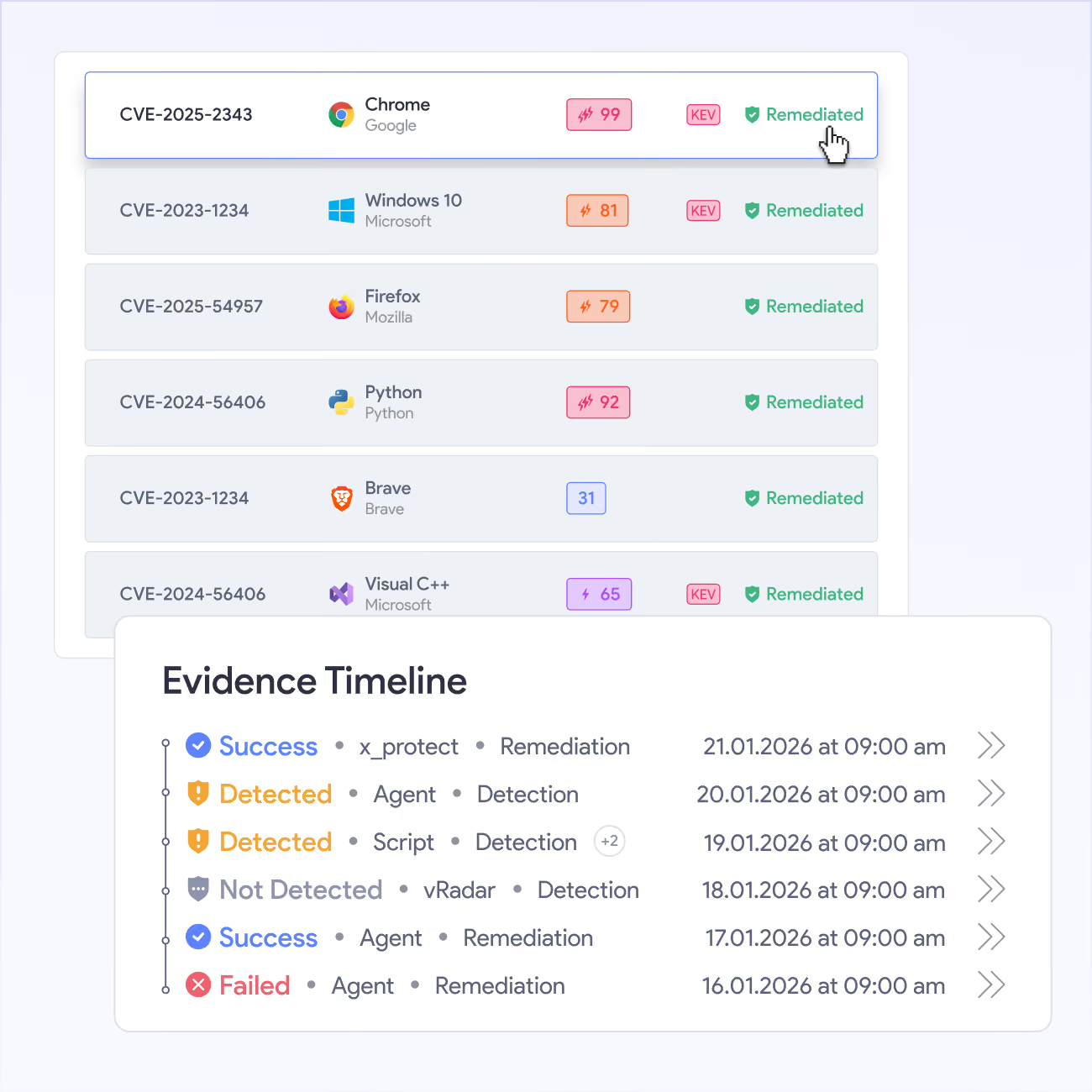
CISOs don't just need to fix vulnerabilities. They need to prove it. vRx gives you the risk visibility your board expects and the remediation data your auditors demand, without adding another tool to manage.
reduction in mean time to remediation
more closed CVEs VS scanner-only workflows
audit-ready remediation proof from day one












































.png)










Challenges

No single source of truth

Board asks for metrics you don't have

Remediation is a black hole

IT won't patch without business justification
Benefits & capabilities

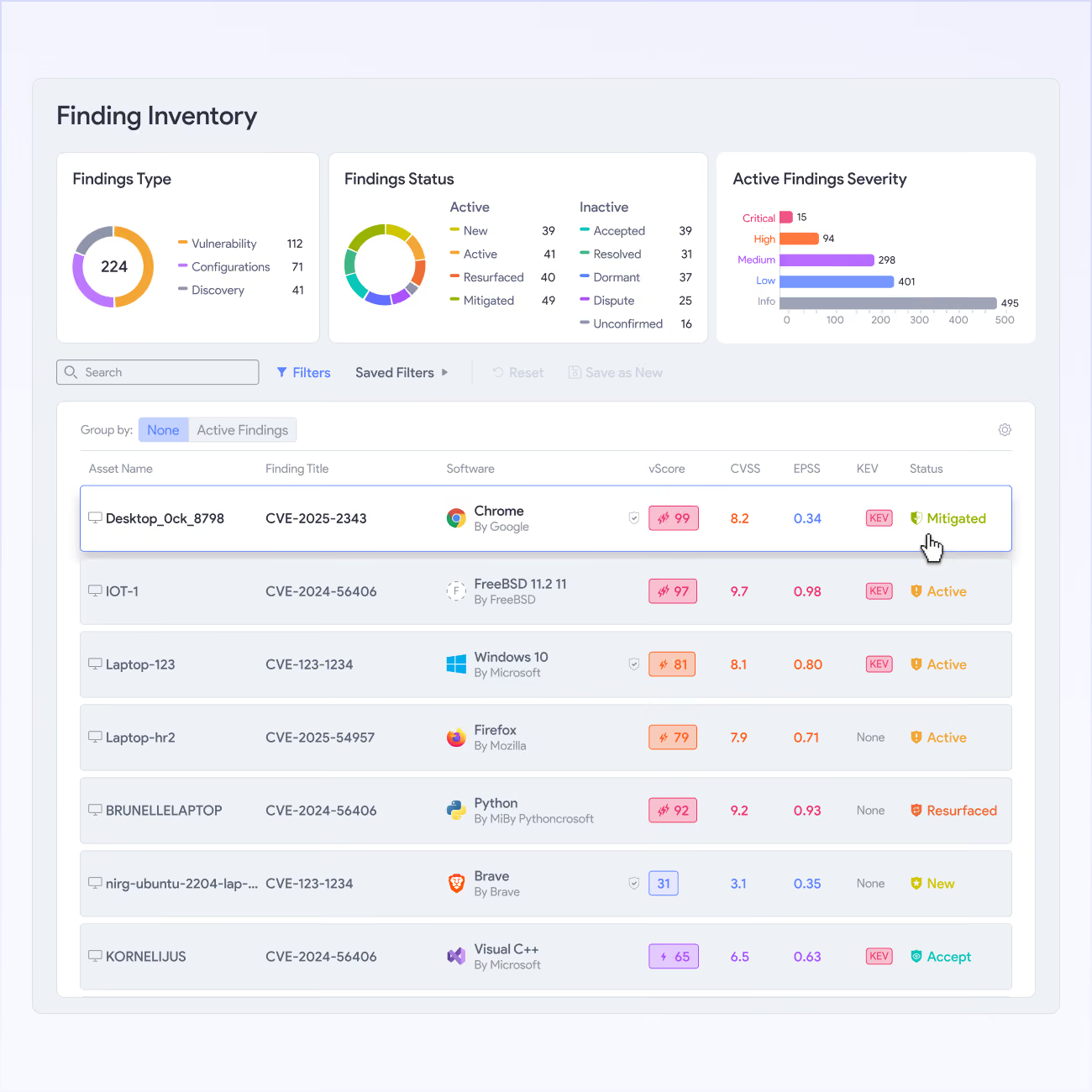
Risk-based prioritization, not a CVE dump
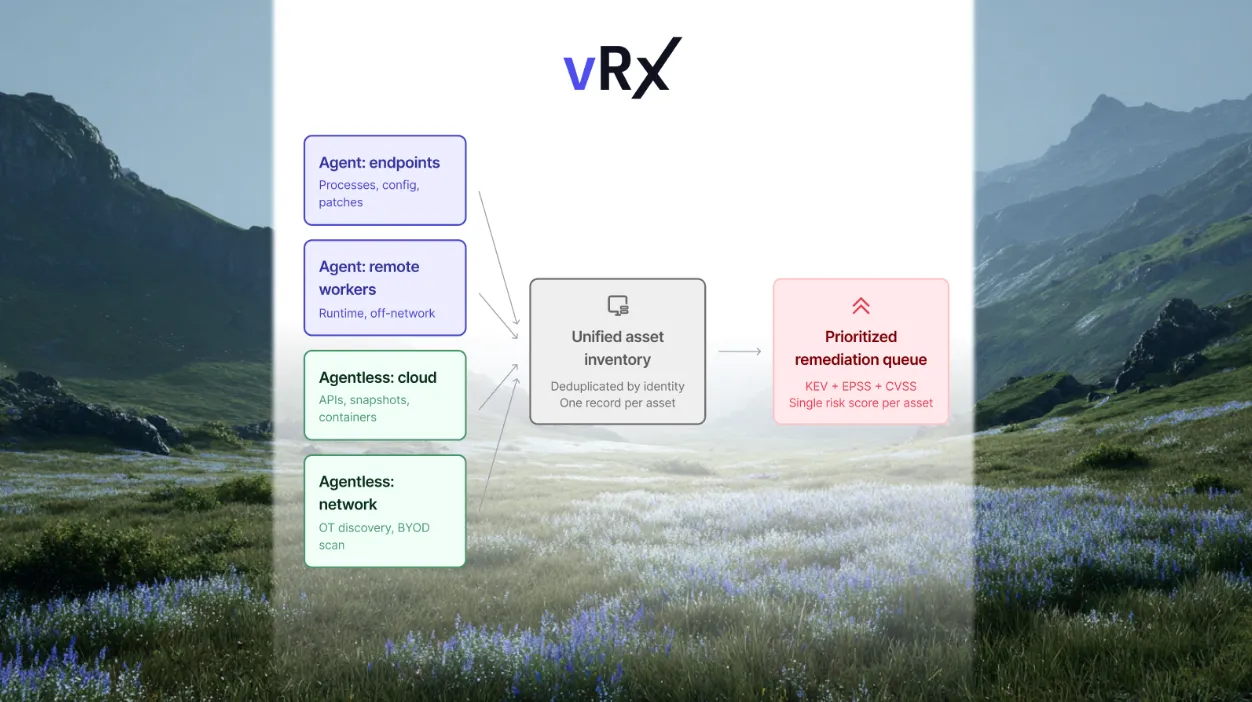
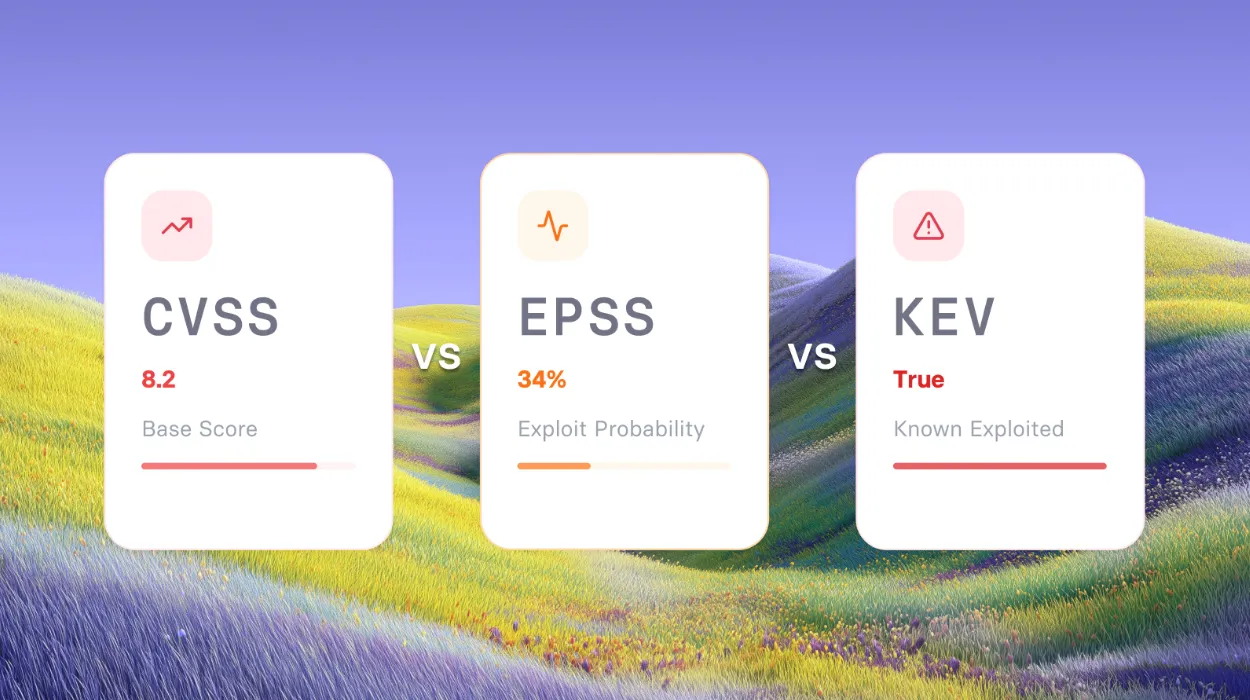
vRx and vIntelligence combine EPSS score, KEV status, and exploit reachability in your specific environment into a single prioritized queue, not a ranked list of 12,000.
.svg)

Board-ready risk reporting without custom dashboards
vRx tracks risk score by site, asset group, and business unit in plain language, not CVSS numbers and exports to PDF or feeds your existing SIEM.
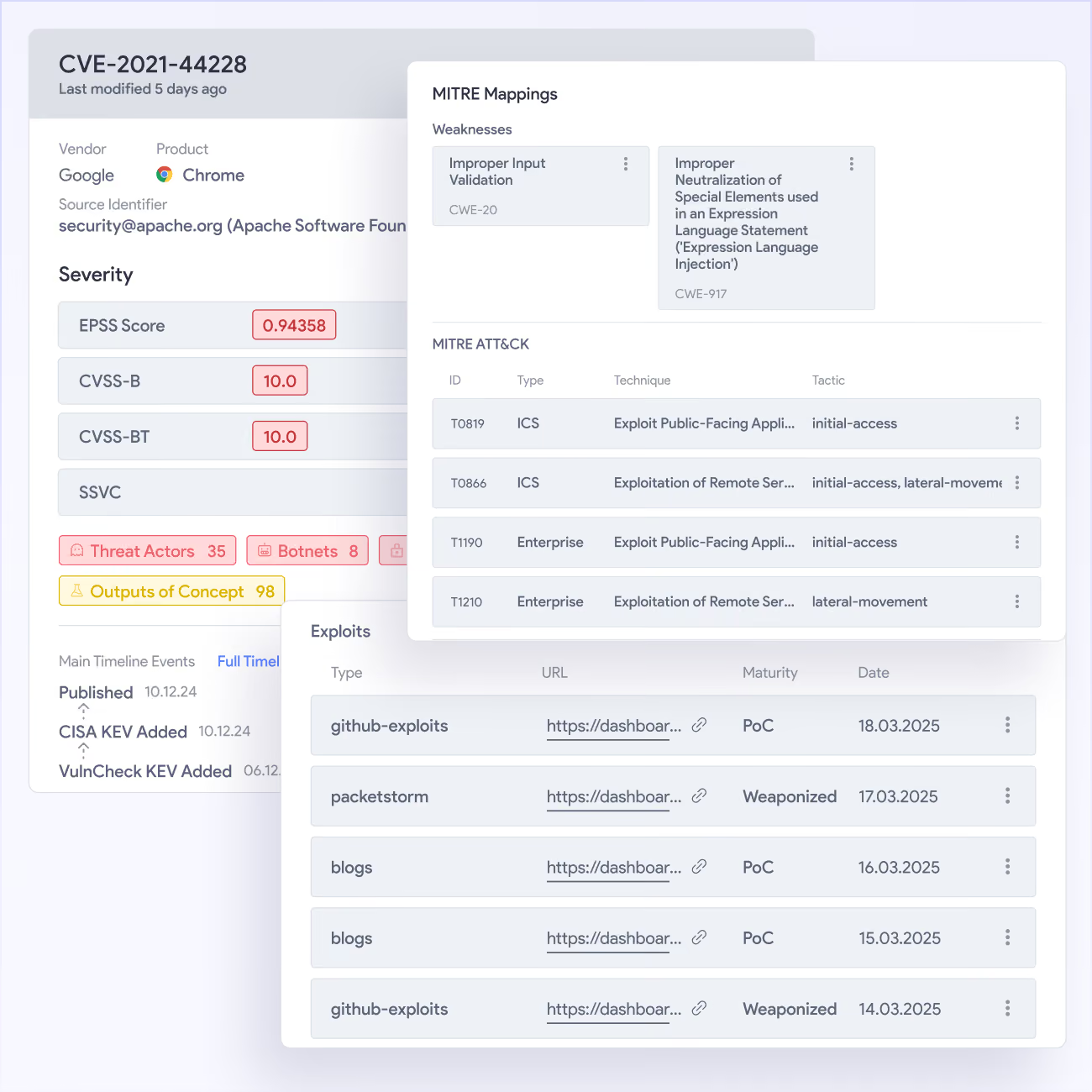
IT patches when they understand the risk, vRx makes that automatic
Every remediation ticket vRx creates includes business-context justification: what the vulnerability enables, what assets are exposed, and what the blast radius looks like if left open.

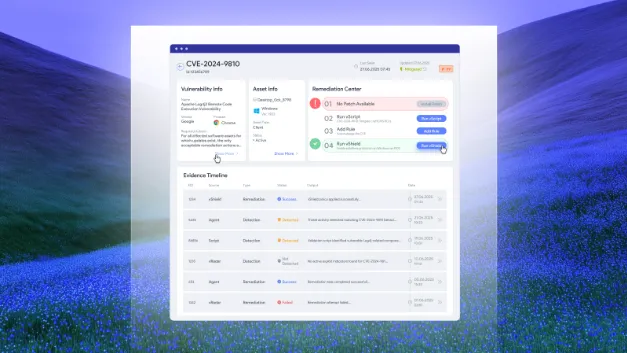
Closed-loop remediation with a full audit trail
Every patch, vShield patchless protection, and vScript execution is logged with timestamp, asset scope, and operator, automatically, without a separate ticketing integration.







Hear from our Customers
All in one platform



From urgency to strategy

EL AL secures global Patch Compliance


Complete Vulnerability Remediation Platform
Valuable resources saved

Third-party software patching is the most valuable feature.
Single source of truth, capable of handling any application in our fleet
60% faster remediation, many hours saved
Great patching capabilities, helpful dashboard, and excellent support
My favorite feature is Patchless Protection

Unified vulnerability discovery, prioritization, and remediation
Patchless Protection is an incredible technology!
Merge Security & IT to Remediate Threats

Explore Solutions
Got Questions?
We already have Tenable/Qualys. Why do we need vRx on top of that?
You don't have to replace your scanner. vRx works alongside it. Your existing scanner keeps running, vRx ingests those findings, adds its own agent-based and agentless detections via vRadar, and gives you a validated, deduplicated view across both sources. Where most tools stop at detection, vRx continues into prioritization and remediation in the same workflow, vPatch, patchless protection, or scripted fix. What you're missing today isn't detection. It's the closed loop between finding and fixed. Most Tenable and Qualys customers have thousands of open findings that have been "known" for months. vRx is what moves them from known to fixed, with a timestamped record to prove it.
How does vRx decide what to prioritize? We've been burned by CVSS scores that meant nothing.
CVSS alone is useless for prioritization, and you're right to distrust it. vRx combines four signals, EPSS probability (how likely this CVE gets exploited in the next 30 days), CISA KEV status (is it already being exploited in the wild), with vIntelligence you can perform exploit simulation to understand reachability in your specific environment (can an attacker reach and exploit the vulnerable asset), and business context you define (this asset is production-critical, this one is a test box). A CVE that scores 9.8 in CVSS but sits on an isolated dev server with no external exposure will rank lower than a 6.5 CVE on an internet-facing system running a process your CFO depends on. That's the calculation your scanner can't make.
What does the audit trail look like? Our compliance team needs specifics.
Every remediation action vRx takes or triggers gets logged, timestamp, asset ID, vulnerability, remediation type (vPatch / vShield / vScript), operator or automation rule that ran it, and outcome. It's queryable by date range, asset group, or compliance framework. For SOC 2 and PCI audits specifically, you can export a per-control evidence package. For internal reviews, the risk score trend over time shows whether your posture is actually improving. The log is immutable, nothing gets quietly removed if a remediation was partial or failed.
How long does it take to get value? Our last security tool took six months to fully deploy.
The agent deploys in minutes across Windows, macOS, and Linux, and agentless scanning via vRadar starts immediately for assets where you can't install an agent. Your first prioritized finding list is ready the same day. The board-level risk dashboard takes about a week to configure properly, mostly because you'll want to define your asset criticality tiers before the scores mean anything. Six months is a scanner problem, scanners need tuning, exclusions, and credential management. vRx is built to show you something real on day one.
What happens when there's no patch available? That's where we're usually stuck.
That's exactly where vShield comes in. When a patch doesn't exist yet, or when patching would break a critical production system during a change freeze, vShield applies dynamic binary instrumentation to block the exploit path at runtime without modifying the underlying software. The vulnerability stays technically present, the attack vector gets neutralized. It's not a permanent fix, and we won't pretend otherwise. But it closes your exposure window from "months until the vendor ships something" to "minutes after the CVE drops." For zero-days and actively exploited vulnerabilities, that window is the difference between a near-miss and a breach.

Start your free demo!