Katie: You know, there's a phrase that has never felt more accurate for the business world, especially in tech. It's from Lewis Carroll's Through the Looking Glass.
James: Oh, I think I know the one you mean.
Katie: It's that famous paradox. It takes all the running you can do to keep in the same place.
James: And if you want to get somewhere else, you have to run twice as fast.
Katie: Exactly. And that perfectly captures, I think, what it feels like to navigate the technical landscape today. Just maintaining your position requires this exhausting, continuous effort.
James: It really does.
Katie: And today we are diving deep into how this pressure really impacts managed service providers, or MSPs. Our mission here is to look at the sources that detail a, well, a critical strategic shift.
James: A necessary one.
Katie: Right. How do MSPs escape that exhausting reactive cycle of break-fix and transition into becoming, you know, true strategic partners? Partners who are focused on measurable, predictable outcomes for you, the client.
James: And the need for this is it's urgent. The ground's moving so quickly. Our sources really highlight that hesitation isn't just costly anymore.
Katie: What is it then?
James: It means you're going to be blindsided, blindsided by entirely new kinds of risk.
Katie: OK, so give us the initial shock factor. What did the research show about the current threat environment that's so different?
James: Here's a nugget that really stopped me in my tracks. Modern malware is now employing what the sources call AI-driven vibe coding.
Katie: Vibe coding, that sounds less like cybersecurity and more like something a club promoter came up with. What does that actually mean?
James: It means the code is alive, functionally. It's not static.
Katie: Okay.
James: Traditional security tools, you know, they look for known signatures, fixed patterns. But vibe coding, which is driven by machine learning, allows the malware to dynamically rewrite its own structure, its own behavior.
Katie: On the fly.
James: On the fly. It constantly alters its appearance. It might probe specific network packets or the timing of sandbox behaviors just to make sure that no two attack vectors look exactly the same on the wire.
Katie: So it's basically changing its fingerprint to slip past the initial checkpoints.
James: That's a perfect way to put it. It makes the underlying architecture appear totally unpredictable and therefore undetectable to traditional tools. And this dynamic threat proves one central point. It is the old model of fixing things after they break the break fix model. It's not just inefficient. It's fundamentally incompatible with modern reality.
Katie: That sets the stage perfectly for our first major focus then, why that break-fix trap has become, well, fatal in this age of acceleration.
James: The foundational expectation from the client has just, it's completely shifted. They assume digital continuity.
Katie: It's a given.
James: It's a given. Their distributed workforce, the remote workflows, these are non-negotiables. And then you add the constant tightening external pressure from regulators, from cyber insurers. The client is already spending huge effort just to hold their position.
Katie: And that's the core commercial tragedy, isn't it, for the MSP stuck in this cycle, when the only tangible interaction the client has with their service provider is when something is already on fire.
James: They stop seeing the MSP as the fire department. They start to see them as the faulty wiring that caused the fire in the first place. The service is only necessary because the system failed, which theoretically the MSP was supposed to prevent.
Katie: That image is exhausting. I think anyone running a business today feels that treadmill effect. And it creates this massive perception gap that just widens so quickly.
James: It does. And that gap pushes every conversation down the same unfortunate path. When your service feels interchangeable, when your job is just fixing the thing that broke, executives will compare MSPs on the most shallow criteria possible.
Katie: Which means the only lever they feel like they have left to pull is price.
James: Correct. And the conversation just spirals toward cost instead of strategic capability or, you know, spiralized knowledge. That price pressure compresses margins, which makes it impossible for the MSP to invest in the advanced tools and expertise they need.
Katie: And trust just roads. Exactly.
James: A relationship that's built on how many tickets you close just doesn't inspire confidence when an organization needs a guiding hand for their long-term stability.
Katie: You end up running twice as fast just to lose money and trust. It really seems like the leverage point here isn't the technology, it's the narrative. You have to move the discussion away from how fast can you respond?
James: And toward how often do you prevent the crisis entirely?
Katie: Yes. So how do they do that? How do MSPs pivot away from being a transactional cost and toward being a strategic value?
James: And that brings us to the crucial part of our deep dive. repositioning the entire relationship around measurable business outcomes.
Katie: This can't just be about changing marketing copy, right? This requires a fundamental shift in how the work itself is defined and priced and reported.
James: Absolutely. The MSP has to reorient their entire scope around the improvements they enable. the resilience, the predictability, the stability, not just the actions they perform.
Katie: Because clients aren't buying tool licenses.
James: No, they're not buying hours of patching. They're investing in the confidence that their core workflows will hold together for the next three years.
Katie: OK, so let's talk language, because this is where the pivot really starts. If I'm a business leader, I don't want to hear about successful patch management. So what language actually resonates with me?
James: You have to translate those technical actions into financial or operational impact. So instead of reporting, we applied 900 patches last quarter, you report a 40 percent reduction in high priority operational incidents.
Katie: Or maybe steadier, more predictable quarterly IT spending.
James: Precisely.
Katie: Or I suppose rather than talking about the complexity of your multi-layer security stack, you talk about achieving a stronger compliance posture, reducing liability exposure by X factor.
James: Or achieving greater stability for the remote sales workflow. That makes the link between the MSP's work and the client's P&L absolutely undeniable.
Katie: And that strategic approach has to be baked into how the services are packaged. The sources make a really strong case that tiers should be designed around levels of assurance.
James: Yes, or risk oversight, not just collections of tools or hardware bundles.
Katie: That is a critical distinction. It's a difference between buying ingredients and buying a finished meal. You're buying the guaranteed outcome.
James: Right. So if an MSP has three tiers, they shouldn't be bronze, silver, and gold based on how many endpoints are covered or how fast the response time is. The tiers should represent different degrees of operational steadiness.
Katie: Give us an example. How does that reframe the whole offering?
James: Okay, so in an assurance-based model, the lowest tier might offer, say, reactive stabilization and minimal compliance help. The top tier, though, that's premium.
Katie: And what does that guarantee?
James: It guarantees a proactive reduction in technical debt, continuous policy enforcement, and maybe even a specific commitment to maintaining a really narrow risk window. The client gets to choose the level of stability they're willing to maintain, and the MSP builds the service around that promise.
Katie: And the report for that top tier has to speak to that promise. So you're not reporting on system uptime. You're reporting on the value of the downtime you avoided.
James: You're quantifying the risk the client didn't have to face measuredly in industry benchmarks.
Katie: Exactly. And that framing makes it so much easier to justify the investment with tangible financial metrics, trend analysis, risk projections, strategic planning.
James: which naturally leads us into our next phase, establishing a consistent consultative rhythm. Because you can't talk strategy once a year. It just doesn't work.
Katie: I think we all know that feeling of dread. The MSP only calls when there's a bill due or when something is horribly, horribly wrong.
James: Right. So we need to replace that reactive, incident-driven contact pattern with a structured, regular, strategic dialogue.
Katie: This change in posture requires shaping interactions around future trends, emerging risks, and upcoming shifts in the client's own environment.
James: And this isn't about grand gestures or annual dinners. It's about structured, relevant engagement, a consultative rhythm.
Katie: So what does a successful quarterly conversation look like in this new framework? Because if it's just a checklist review, you're wasting everyone's time.
James: The conversation has to shift. It shifts focus from historical ticket closure rates to emergent dependencies. You're identifying operational friction points, near-term changes that could affect organizational stability. The best MSPs are looking six, nine, 12 months out, not six hours back.
Katie: The MSP is essentially offering a kind of orientation in a fast moving complex world.
James: They become the eyes on the wider landscape. They alert clients to risks that are just beginning to surface elsewhere in their industry, their geography, or with their specific tech stack. They help the client sort of brace before those pressures arrive.
Katie: Can you give an example of that? Sure.
James: Like alerting a manufacturing client about a new supply chain vulnerability that affects their specific ERP system, but months before it becomes a major news story.
Katie: That level of foresight also informs the MSP about the client's own growth needs, their optimization possibilities. As their infrastructure naturally evolves, it becomes a true two-way dialogue.
James: And that ongoing engagement provides what our source material calls the anchor effect.
Katie: The anchor effect.
James: It helps clients feel anchored. It reinforces the idea that progress is achievable even when the environment feels unstable because someone is watching the right indicators. The client's internal team can then focus on their core business.
Katie: Right. Secure in the knowledge that external risks are being actively monitored and mitigated by a partner with foresight.
James: That trust is priceless. It removes the panic from the whole process.
Katie: If you can help a client avoid a costly data migration failure because you alerted them to a new regulatory amendment six months early, you've probably secured that relationship for life.
James: And if we look for the single most effective way to establish and frankly monetize that consultative rhythm, it leads us directly to security.
Katie: Which brings us to our final section, security as the non-negotiable foundation for a strategic partnership.
James: Exactly.
Katie: Security management isn't a checklist item anymore. It's not something you do just to pass an audit. It is the defining fourth shaping modern tech management.
James: And we talked about the AI-driven malware. Now, later on top of that, the continuous tightening of underwriting expectations from cyber insurers and the constant regulatory demands for demonstrable controls. The stakes are immense.
Katie: And this is the strategic accelerator for the MSP.
James: It is. Leaning into security accelerates that transition to strategic territory because it speaks directly to executive concerns, risk, liability, reputation. It demonstrates a level of maturity that immediately elevates the MSP above that break-fix commodity level.
Katie: And security work, by its nature, creates the perfect structure for outcome-driven delivery. Continuous assessment surfaces fragility before failures crystallize into an incident.
James: and prioritize remediation forces the MSP and the client to focus their attention on the issues with the greatest operational or reputational impact.
Katie: So the clearest, most measurable path toward this, according to the research, is through robust vulnerability management, or VM.
James: That's it.
Katie: Okay, but why VM specifically? Why not just endpoint detection or threat hunting?
James: Because Effective VM provides tangible changes that clients can see and understand without needing to decode all the technical details. It takes something scary, an amorphous cyber risk, and turns it into a manageable metric.
Katie: It's just the entire narrative from fear to progress.
James: Absolutely. The outcomes of effective VM are highly visible in a way that just resonates with leaders. Exposure counts fall. Repeat issues disappear from the reports. Remediation cycles get shorter. The client intuitively understands month over month that their environment is becoming demonstrably more resilient and stable.
Katie: And this continuous rhythm of VM provides the perfect fuel for that quarterly consultative check-in we were just talking about.
James: It does. Each assessment cycle reveals movement. The MSP can show the client which systems have stabilized, which patterns point to structural weaknesses in, say, their HR software rollouts.
Katie: And which areas are gaining resilience thanks to their joint effort. It's real-time data-feeding strategic planning.
James: And this is where specialized tools become indispensable for the MSP. It's how they scale this strategic insight across their entire client portfolio.
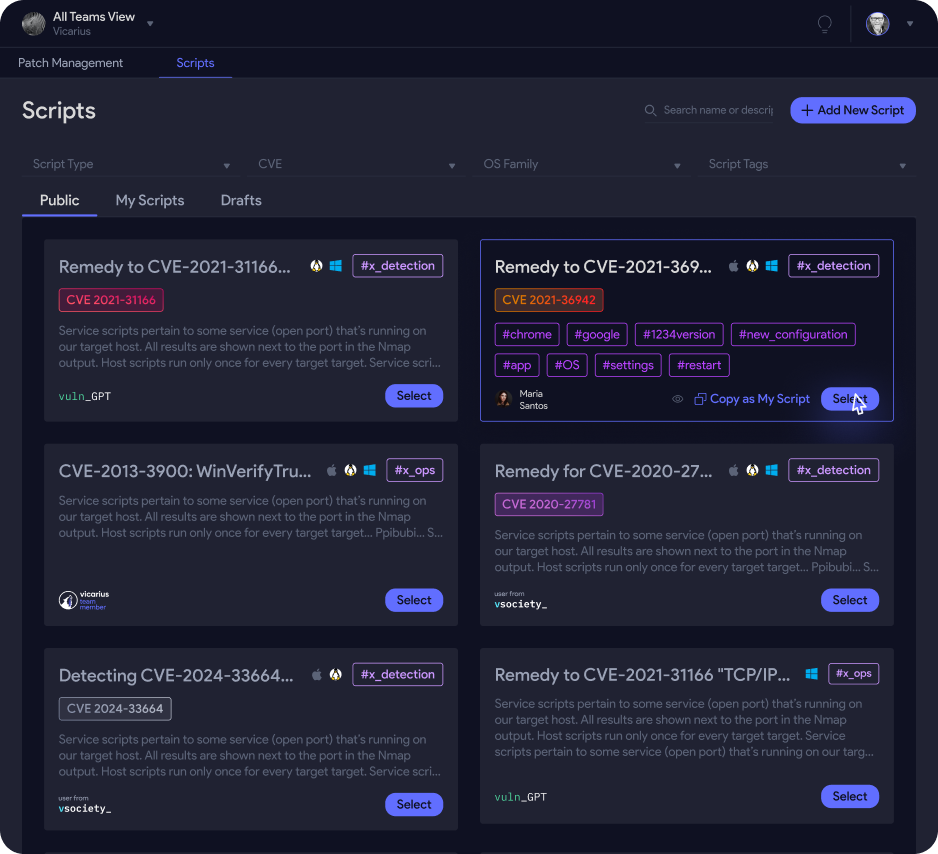
Katie: That's the key distinction, isn't it? The sources specifically mention solutions like VRX by Vicarious, and their utility goes beyond just scanning one network.
James: Right. The power these tools offer the MSP is a unified dashboard. It instantly visualizes risk across the entire client portfolio.
Katie: Wait, so the MSP can see comparative health data. How does that change the conversation?
James: It completely transforms the quarterly review. Instead of the conversation being limited to that one company's problems, the MSP can bring in contextual comparative data. They can show the client how their peers in the same sector are mitigating specific vulnerabilities.
Katie: So the client can see exactly how they stack up.
James: Exactly. And where their next budget dollars should go to close the most critical exposure caps. It allows the MSP to guide architectural planning and budget conversations with industry relevant, actionable data, not just instinct.
Katie: This kind of visibility means the narrative shifts completely. You move away from that exhausting story of firefighting to one of momentum building.
James: Clients gain confidence that progress is possible when they can see the MSP helps them run with purpose rather than just sprinting to recover.
Katie: That reframing is the ultimate goal, isn't it?
James: It is. When clients see that the MSP helps them regain control over the pace at which risk accumulates and shows them the measurable reduction in that risk, the relationship is fundamentally transformed. You go from being a vendor to a trusted strategic partner.
Katie: So what does this all mean? The playbook for becoming a strategic partner seems pretty clear. You have to define your work by the quantifiable business outcomes it generates, not the volume of tasks you complete.
James: You must maintain that consistent, future-focused, consultative rhythm of interaction.
Katie: And you have to treat security specifically through continuous vulnerability management as a continual, decisive force that provides the data you need for that strategic guidance.
James: That process shifts the relationship from commodity provision to a necessary strategic partnership. It offers stability and clarity in a world that is only getting faster.
Katie: And that leaves us with a final thought for you to consider based on everything we've explored today.
James: In an ever-accelerating environment, how do you define stability for your organization? Is true stability just the absence of incidents? Or is it the predictability of your ongoing adjustment, your resilience, and your risk reduction?
Katie: That is something to mull on. The goal isn't just running fast, it's running with purpose and a clear destination. We've covered a massive amount of ground today on how to establish that purpose. Until the next deep dive, keep learning, keep questioning, and keep moving forward.